What Happened
CRM meeting notes are supposed to help teams understand buyer intent, next steps, blockers, urgency, and relationship context. In practice, notes often vary wildly by rep, manager, deal stage, and meeting type. Some notes are thoughtful and specific. Others are a few words typed after a busy day. Some include promises that never become tasks. Some mention budget risk, legal concerns, or implementation questions without updating the opportunity record.
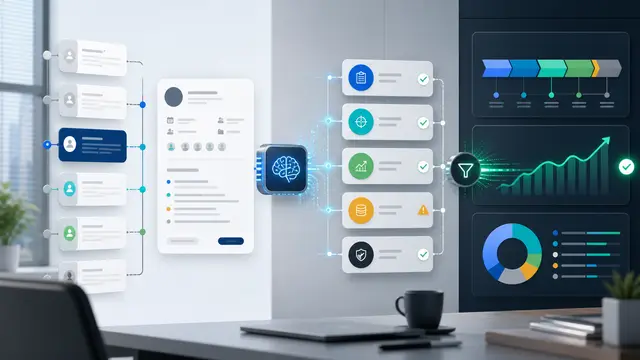
An AI meeting note quality check gives revenue teams a lightweight way to improve pipeline signal without turning managers into note police. The automation reviews new notes, compares them with the opportunity stage and expected information, identifies missing or unclear details, and routes a prompt to the account owner when a note needs cleanup. It can also highlight strong notes as examples for coaching.
This is not about making every salesperson write the same way. It is about making sure critical business signals do not disappear inside inconsistent notes. If a buyer says timing has shifted, the close date should probably be reviewed. If procurement is involved, the next step should reflect it. If a technical blocker appears, solution engineering may need a task. If the champion leaves the company, risk should be visible before forecast review.
Pipeline quality depends on the quality of the operating evidence behind it. Forecast categories, stages, and close dates are often treated as the formal truth, while meeting notes are treated as informal context. But notes frequently contain the first sign that the formal fields are no longer accurate. AI can bridge that gap by reading the context and asking whether the structured CRM record still matches reality.
The strongest workflow supports reps instead of shaming them. It gives quick feedback while the meeting is still fresh, suggests missing fields, and reduces the end-of-week cleanup burden. Managers get better signals, reps spend less time reconstructing context, and handoffs become more reliable.
Why It Matters for Businesses
CRM note quality matters because it affects every downstream revenue process. Forecast meetings depend on current evidence. Sales managers use notes to coach deal strategy. Customer success teams depend on sales context during handoff. Marketing wants to understand objections and campaign fit. Finance may need visibility into discount or payment concerns. When notes are incomplete, every team works with a weaker version of the customer story.
Poor notes create noise in the pipeline. A deal may look active because the stage has not changed, even though the last note says the buyer went quiet. Another deal may be forecast confidently even though the note mentions a pending security review. A third deal may be marked as stalled when the note actually shows a clear next step that was never converted into a task. These mismatches make leaders doubt the CRM.
AI can help because meeting notes are unstructured by nature. People write in fragments, shorthand, and different styles. A traditional required-field checklist can capture some information, but it cannot always understand whether the note actually supports the opportunity state. AI can compare meaning against expectations. It can notice that a next step lacks an owner, that a close date conflicts with the buying process, or that a risk was mentioned without a follow-up.
The workflow can also improve coaching. Instead of a manager manually reading every note before one-on-ones, the automation can group notes by quality theme. One rep may consistently miss decision process detail. Another may capture pain points but not action ownership. A third may write detailed notes but fail to update opportunity fields. Coaching becomes specific and evidence-based.
Customer handoffs become cleaner as well. When an opportunity closes, the customer success or delivery team should not have to decode months of inconsistent notes. A quality workflow can flag missing implementation context, promised outcomes, stakeholder names, timeline constraints, and open concerns before the handoff meeting. That makes the first post-sale interaction feel more prepared.
There is also a governance benefit. Revenue teams increasingly use AI summaries, call intelligence, and automated CRM updates. If note quality is weak, those systems inherit weak context. A quality check helps maintain a trustworthy foundation before more automation is layered on top.
The Practical Automation Opportunity
The practical automation starts by defining what a good note means for each meeting type. A discovery note should capture business problem, stakeholders, urgency, qualification concerns, and next step. A demo note should capture use cases, objections, decision criteria, and follow-up assets. A negotiation note should capture commercial issues, approval path, legal or procurement status, and timing. A renewal note should capture usage, satisfaction, risk, expansion potential, and customer commitments.
The AI review should be framed as a quality assistant. It can inspect new notes and classify them as complete, needs clarification, missing next step, risk not reflected in opportunity fields, stakeholder change not captured, customer promise not assigned, or stage evidence mismatch. The output should be short and actionable. Reps should know exactly what to fix.
Integration with the CRM should respect workflow speed. A low-risk note can pass without interruption. A note missing a clear next step can trigger a private reminder to the owner. A note mentioning deal risk can create a manager-visible flag. A note containing a customer promise can suggest a follow-up task. The goal is to help signals reach the right place without creating a review bottleneck.
The workflow can also compare notes to opportunity fields. If a note says the buyer is waiting on budget approval, but the stage is late negotiation with no risk flag, the system can ask for confirmation. If a note says legal review starts next month, but close date is this month, the system can prompt an update. These checks improve forecast hygiene because they connect narrative evidence to structured data.
Privacy and trust need attention. Reps should know what the system reviews, who sees the results, and how quality categories are used. The automation should support better selling, not create a surveillance culture. Managers should use patterns for coaching and process improvement, not as a blunt scorecard detached from deal context.
A useful dashboard can show notes reviewed, notes needing updates, common missing fields, risks found, tasks created from customer promises, and stage mismatches corrected. It can also show improvement over time by team or meeting type. The metrics should focus on better pipeline evidence, not on writing volume.
Pilot the workflow with one sales team and a few opportunity stages. Start with the highest-value checks: missing next step, unassigned customer promise, close date conflict, and risk not reflected in CRM fields. Once reps see that the reminders save time and prevent awkward follow-up gaps, expand the categories.
The automation should leave room for human judgment. A short note may be perfectly fine after a brief scheduling call. A long note may still miss the real blocker. AI can point to the issue, but the account owner should decide how to update the CRM and what action makes sense.
The workflow can include a short feedback loop inside the CRM. When a note is flagged, the rep should be able to mark the suggestion as useful, not useful, already handled, or not applicable. That feedback helps refine the quality model and prevents the automation from repeating weak reminders. It also gives sales operations evidence about which checks actually improve the pipeline.
Stage-specific rules make the review more credible. Early opportunities need problem clarity and next-step ownership. Middle-stage opportunities need stakeholder map, objections, fit, and mutual action. Late-stage opportunities need procurement status, legal risk, commercial terms, and implementation assumptions. Renewal conversations need value evidence, adoption signals, and risk themes. AI should evaluate notes against the context instead of applying one generic checklist.
Managers should receive patterns rather than every small correction. A daily digest can show the deals where note quality affects forecast trust, while minor cleanup reminders go directly to the owner. This keeps managers focused on real coaching and risk conversations. It also avoids turning the workflow into another noisy notification stream.
The automation can support onboarding for new sellers. Strong examples, anonymized patterns, and prompt suggestions help new team members learn what good commercial evidence looks like. Instead of waiting for a manager to catch issues after several pipeline reviews, the new rep gets practical guidance while the customer conversation is still fresh.
Sales operations should review quality categories every month. If one category rarely changes behavior, remove it. If another category predicts forecast misses or handoff problems, strengthen it. This keeps the workflow tied to business outcomes instead of preserving rules just because they were part of the first design.
Business Takeaway
CRM meeting notes are more than documentation. They are early pipeline signals. Automating quality checks helps revenue teams keep those signals clean before forecasts, handoffs, and customer promises depend on them.
The practical goal is not perfect writing. It is reliable evidence. When notes consistently capture the right information and connect to CRM fields, managers coach better, reps follow up faster, and the pipeline becomes easier to trust.