What Happened
Marketing attribution often stops at the point where the business most needs operational clarity. A campaign generates a form fill, a webinar attendee, a content download, a chat conversation, or a call request. The marketing system records the source, the CRM receives a lead, and the dashboard shows activity. But the real business question is not only where the lead came from. The question is whether the campaign produced the right follow-up work and whether that work moved the buyer closer to a useful conversation.
Many companies struggle because attribution and sales execution live in separate rhythms. Marketing measures channels, campaigns, audiences, and cost. Sales measures pipeline, meetings, opportunities, and revenue. Between those worlds are follow-up tasks, lead routing rules, qualification notes, missed calls, duplicate records, slow responses, and unclear handoffs. AI can help connect the campaign signal to the operating work that should happen next.
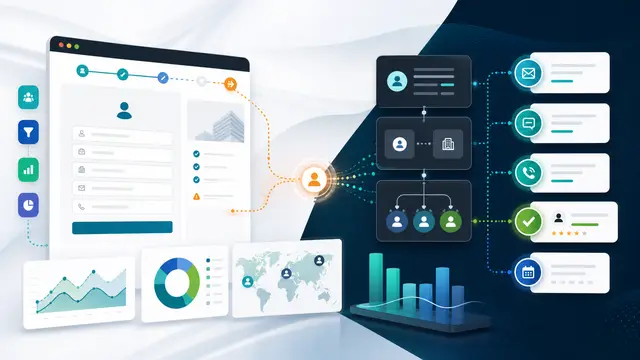
This is not about replacing attribution platforms. It is about adding a workflow layer that interprets marketing signals in context. AI can look at campaign source, page behavior, form answers, company profile, CRM history, prior conversations, territory rules, product interest, and engagement timing. It can then recommend the right follow-up path, detect weak handoffs, summarize context for the seller, and flag campaign responses that are not receiving timely attention.
The practical problem is common. A high-intent prospect requests information, but the CRM task is generic. A returning customer clicks a pricing page, but the account owner does not see it. A webinar attendee asks a detailed question, but the note never reaches sales. A campaign produces many leads, but the team cannot tell which ones received meaningful follow-up and which were simply marked complete. Attribution without workflow visibility can make marketing look productive while revenue execution remains inconsistent.
AI helps by turning attribution into action intelligence. Instead of reporting that a campaign generated one hundred leads, the workflow can report how many received context-aware follow-up, how many had missing routing data, how many matched existing accounts, how many had buying signals, and how many stalled before a first useful conversation. That is a more operational view of marketing performance.
For business leaders, this distinction matters because campaign ROI depends on execution quality. A strong campaign can underperform if follow-up is late or poorly matched. A smaller campaign can produce excellent value if the right signals reach the right people quickly. AI gives teams a way to inspect the handoff and improve it without asking sales and marketing to manually reconcile every lead.
Why It Matters for Businesses
Marketing and sales teams often argue about lead quality when the deeper issue is signal quality. Marketing may say the campaign produced interest. Sales may say the leads were weak. Both may be partly right. Some leads are not a fit. Some are promising but lack context. Some are routed to the wrong person. Some are contacted too late. Some are existing customers who should not be treated like net-new prospects. Without a workflow view, the company cannot separate these categories.
AI attribution-to-follow-up workflows create a more useful operating conversation. They help teams ask better questions. Did the follow-up match the buyer’s intent? Did the seller receive enough context to personalize the conversation? Did high-value accounts receive faster attention? Did campaign messaging set expectations that sales could continue? Did CRM outcomes reflect reality or just administrative completion?
The measurable benefits include:
- Faster lead response because high-intent signals are identified and routed quickly.
- Better seller preparation because AI summarizes the campaign context and prior account history.
- Fewer duplicate or misrouted leads because records are matched before work is assigned.
- Clearer campaign ROI because follow-up quality becomes part of performance analysis.
- Higher conversion from existing demand because signals are not lost between systems.
- Better sales and marketing alignment because both teams review the same evidence.
This workflow also protects customer experience. Buyers notice when a company responds as if it understands their situation. They also notice when the follow-up feels disconnected from what they asked for. AI can help prepare more relevant outreach, but it should not blindly send messages. The strongest design keeps AI in the preparation and routing layer while humans handle judgment, relationship tone, and negotiation.
Another benefit is learning speed. If AI identifies that certain campaign signals consistently lead to real conversations, marketing can invest more confidently. If it finds that some campaigns create low-fit activity or unclear follow-up, the team can adjust targeting, forms, content, offers, and routing. This turns attribution from a backward-looking report into a feedback loop.
For small businesses, this can be especially powerful because teams are lean. One person may manage campaigns, CRM hygiene, website updates, and sales support. AI can reduce the manual effort required to inspect every response. It can prepare daily follow-up queues, point out stalled leads, and summarize which campaigns generated action instead of just traffic.
The Practical Automation Opportunity
A practical workflow starts with a clear definition of what counts as meaningful follow-up. It may be a completed call, a personalized email, a scheduled meeting, a qualified disqualification, a routed account task, or a customer success handoff. The definition should be specific enough that AI can evaluate the gap between campaign response and business action.
Next, map the data sources. The workflow may read from website forms, analytics events, advertising campaign records, email marketing platforms, webinar tools, chat transcripts, CRM leads, account records, sales tasks, and call notes. The first version should focus on the systems where the most important signals already live. It does not need to solve every attribution question at once.
AI can then create a follow-up signal record for each campaign response. That record should include the source campaign, buyer intent indicators, matched account or contact, existing relationship status, recommended owner, recommended next step, missing data, and urgency. It should also include a short context summary that a seller can use without opening five systems.
The automation should include controls such as:
- Match new responses against existing accounts before creating duplicate work.
- Flag incomplete forms or suspicious submissions before they reach sales.
- Separate research behavior from direct buying intent.
- Show why a response is considered high priority.
- Keep outreach drafts human-reviewed.
- Track whether recommended follow-up happened on time.
A useful daily view might group campaign responses into categories. Respond today. Needs enrichment. Existing customer signal. Nurture only. Possible duplicate. No action needed. Sales leaders can review whether high-priority items are moving. Marketing leaders can see which campaigns produced usable signals. Operations can find routing problems and CRM data gaps.
Over time, the workflow can become a closed-loop improvement system. It can compare recommended actions with actual outcomes. It can show which signals predict meetings, pipeline, renewals, or service inquiries. It can identify campaigns that create follow-up overload without enough value. It can also detect where sales teams need better templates, enablement, or product context.
The first pilot should be focused. Choose one channel, such as website demo requests or webinar attendance. Define three to five intent signals. Build a daily AI-assisted queue. Review it with sales and marketing for a few weeks. Measure response time, meeting conversion, duplicate reduction, and seller satisfaction with context quality. Then expand to more channels.
A mature system can trigger tasks, draft summaries, update CRM fields, and prepare campaign performance notes. The point is not to automate every sales motion. It is to ensure that valuable buyer signals become accountable follow-up work. That is where attribution becomes revenue operations.
The workflow should also review what happens after the first touch. A fast response is useful, but it is not enough if the follow-up does not match intent. AI can compare the buyer's original signal with the sales activity that followed. If a prospect downloaded a technical implementation guide and the seller sent a generic introduction, that is a context gap. If a current customer visited a service page and received a net-new sales sequence, that is a relationship gap. These patterns help teams improve playbooks instead of only measuring speed.
Marketing operations can use the same signal layer to improve website and campaign design. If high-fit buyers repeatedly ask the same question before converting, the website may need clearer content. If leads from a campaign often require manual enrichment before routing, the form may need one better field or a hidden data lookup. If certain audiences convert only after a human sends operational proof, marketing can create stronger middle-funnel assets. AI makes these lessons easier to extract from everyday workflow evidence.
Business Takeaway
AI can connect marketing attribution to sales follow-up by translating campaign activity into practical workflow signals. Businesses gain more than a better source report. They gain a way to see whether interest became action, whether sellers received useful context, and whether campaign ROI was limited by execution gaps. The companies that build this bridge can respond faster, learn from real outcomes, and make sales and marketing alignment measurable.