What Happened
CRM attribution conflicts are common because customer journeys are messy. A lead arrives through a paid campaign, later fills out a website form, replies to a sales email, attends a webinar, and gets updated manually by a representative. Marketing sees one source. Sales sees another. Finance wants to know which channel influenced revenue. Leadership asks which campaigns are working. The CRM contains several answers, and each team trusts the one that supports its view.
AI and automation can help turn conflicting attribution records into cleaner revenue signals. The goal is not to declare a perfect version of truth from imperfect data. The goal is to create a governed reconciliation workflow that identifies conflicts, applies consistent rules, highlights uncertain cases, and explains how attribution decisions were made. That is far more useful than letting every report quietly use a different logic.
Attribution conflict happens in predictable ways. Duplicate contacts split activity history. Required source fields are overwritten by imports. UTM data disappears after a redirect. Offline events are added late. A sales rep changes lead source to reflect the conversation that felt most important. Campaign member status does not match opportunity influence. None of these issues are unusual, but together they weaken revenue reporting.
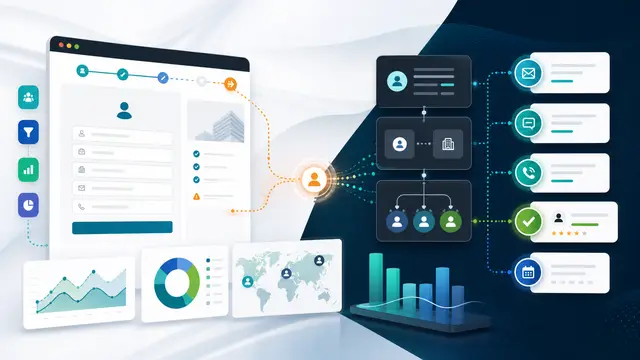
A practical workflow watches for records where the signals disagree. It can compare original source, latest source, campaign history, web form metadata, opportunity creation path, sales activity, and customer journey timestamps. AI can summarize the likely story and classify the conflict type. Rules can then decide whether the record is automatically corrected, routed for review, or left unchanged with a documented reason.
This workflow is especially valuable for businesses that are increasing marketing spend or trying to connect website activity to sales outcomes. If the attribution data is unreliable, budget decisions become political. Clean signals do not require perfect data, but they do require consistent handling of known conflicts.
Why It Matters for Businesses
Revenue attribution matters because it shapes investment. If reports over-credit one channel and under-credit another, the business may cut a program that quietly supports pipeline or overfund a tactic that mostly captures demand created elsewhere. Bad attribution also weakens trust between marketing and sales. Each team may believe the other is misreading the numbers when the real issue is inconsistent data handling.
AI-assisted reconciliation helps because it gives teams a shared operating process. Instead of arguing over a dashboard, they can review conflict categories, rule logic, confidence levels, and exception queues. The conversation shifts from "whose number is right" to "which rule should we apply when these signals disagree." That is a healthier management discussion.
The ROI is visible in planning quality. Better attribution supports smarter campaign spend, cleaner pipeline reviews, stronger website optimization, more accurate partner reporting, and better sales follow-up prioritization. It can also reduce manual cleanup time for revenue operations teams that spend hours each month reconciling exports.
Clean attribution improves customer experience too. When source and intent signals are clearer, follow-up can match the buyer journey. A person who came through a technical comparison page should not receive the same sequence as someone who downloaded a broad awareness guide. A returning customer exploring an add-on should not be treated like a cold lead. Attribution conflicts often hide these distinctions.
For leadership, the most important benefit is confidence. No attribution model will be perfect, but a governed workflow can show which data is strong, which data is questionable, and which decisions depend on assumptions. That clarity is better than false precision.
The Practical Automation Opportunity
The practical automation opportunity is to create an attribution reconciliation desk inside revenue operations.
- Detect records where original source, latest source, campaign history, form data, opportunity source, and sales notes disagree.
- Use AI to summarize the customer journey from available records in plain language.
- Classify conflicts such as duplicate lead history, overwritten source, missing UTM, late campaign association, manual source change, partner influence, and unclear origin.
- Apply deterministic rules for low-risk corrections, such as preserving original source while adding latest meaningful interaction.
- Route ambiguous or high-value conflicts to revenue operations for review.
- Store the final attribution decision, confidence level, and reason code.
- Report recurring conflict causes so marketing operations can fix upstream capture issues.
Start by defining the fields that matter. Many CRMs contain more source fields than anyone can explain. Document which field means first known source, which field means most recent meaningful source, which field supports campaign influence, and which field is used for revenue reporting. AI cannot compensate for undefined ownership.
Next, build a conflict taxonomy. A duplicate contact problem should not be treated like a campaign tagging problem. A missing UTM should not be treated like a sales override. Each conflict type needs a resolution path. Some can be corrected automatically, some need review, and some should remain uncertain but documented.
AI is most useful for narrative and classification. It can read activity history, summarize touchpoints, detect likely intent, and explain why the record looks conflicted. Automation is best for triggering checks, enforcing rules, creating review tasks, and updating approved fields. Together, they create a process that is both intelligent and controlled.
Governance matters because attribution affects budgets and compensation in some organizations. Define who can approve rule changes, how exceptions are sampled, and how disputed records are handled. Keep a log of changes so historical reports can be interpreted correctly. If the model or rules change, leadership should know when and why.
The workflow should lead to upstream fixes. If many conflicts come from one form, repair the form. If partner leads arrive without consistent metadata, update the partner intake process. If reps overwrite fields because the CRM layout is confusing, redesign the fields or permissions. Reconciliation is valuable, but prevention is better.
Business Takeaway
CRM attribution conflicts will not disappear, but they can be managed with discipline. AI helps teams interpret messy journeys, and automation makes sure conflicts are detected, routed, resolved, and documented consistently. The business takeaway is straightforward: trusted revenue signals are built through process, not wishful dashboards. When attribution is cleaner, marketing, sales, and leadership can make better decisions with less argument.
A useful next step is to document the manual decision exactly as it happens today, including the trigger, the data checked, the person who approves the action, the message sent, and the metric reviewed afterward. That map prevents automation from becoming a vague technology project. It makes the workflow concrete enough to pilot, measure, and improve without disrupting the rest of the business.
A useful next step is to document the manual decision exactly as it happens today, including the trigger, the data checked, the person who approves the action, the message sent, and the metric reviewed afterward. That map prevents automation from becoming a vague technology project. It makes the workflow concrete enough to pilot, measure, and improve without disrupting the rest of the business.
A useful next step is to document the manual decision exactly as it happens today, including the trigger, the data checked, the person who approves the action, the message sent, and the metric reviewed afterward. That map prevents automation from becoming a vague technology project. It makes the workflow concrete enough to pilot, measure, and improve without disrupting the rest of the business.
A useful next step is to document the manual decision exactly as it happens today, including the trigger, the data checked, the person who approves the action, the message sent, and the metric reviewed afterward. That map prevents automation from becoming a vague technology project. It makes the workflow concrete enough to pilot, measure, and improve without disrupting the rest of the business.
A useful next step is to document the manual decision exactly as it happens today, including the trigger, the data checked, the person who approves the action, the message sent, and the metric reviewed afterward. That map prevents automation from becoming a vague technology project. It makes the workflow concrete enough to pilot, measure, and improve without disrupting the rest of the business.
A useful next step is to document the manual decision exactly as it happens today, including the trigger, the data checked, the person who approves the action, the message sent, and the metric reviewed afterward. That map prevents automation from becoming a vague technology project. It makes the workflow concrete enough to pilot, measure, and improve without disrupting the rest of the business.
A useful next step is to document the manual decision exactly as it happens today, including the trigger, the data checked, the person who approves the action, the message sent, and the metric reviewed afterward. That map prevents automation from becoming a vague technology project. It makes the workflow concrete enough to pilot, measure, and improve without disrupting the rest of the business.
A useful next step is to document the manual decision exactly as it happens today, including the trigger, the data checked, the person who approves the action, the message sent, and the metric reviewed afterward. That map prevents automation from becoming a vague technology project. It makes the workflow concrete enough to pilot, measure, and improve without disrupting the rest of the business.