What Happened
High-value demos fail in small ways before they fail in obvious ways. The sample account has
stale data. The integration token expired. The promised workflow is not enabled in the
sandbox. The salesperson updated the meeting agenda, but the demo path still reflects last
week’s discovery notes. These issues rarely show up in the CRM forecast, yet they can weaken
buyer confidence at the exact moment the team needs to demonstrate control.
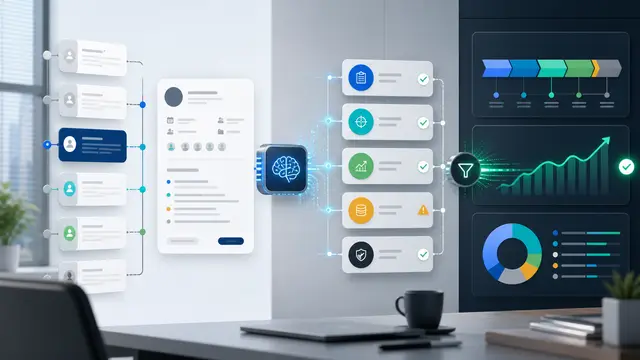
An AI demo readiness workflow gives revenue teams a repeatable way to prepare the
environment, storyline, and evidence before important meetings. It reads CRM opportunity
notes, discovery summaries, stakeholder roles, product usage examples, sandbox
configuration, known limitations, and meeting objectives. Then it creates a readiness brief
that shows what must be checked, what must be refreshed, and what risks should be disclosed
or avoided.
This is not about scripting every seller. It is about reducing preventable friction so the
meeting can focus on the customer’s problem. AI is useful because it can compare buyer
context with demo assets and identify mismatches that a busy team may miss.
The first design decision is ownership. This workflow should not belong only to the software
administrator or only to the department that feels the pain first. For sales, solution
consulting, product marketing, and revenue operations teams that depend on reliable demos,
the right owner is usually the leader who can balance customer impact, operational risk, and
financial consequence. That owner should define what evidence is required, which systems are
trusted, and when the automation is allowed to recommend action versus when it should only
prepare a decision.
The second design decision is timing. A useful automation does not wait until the monthly
review, the quarterly audit, or the angry customer call. It watches for the early signal,
packages the context, and routes the exception while there is still time to act calmly. That
is where AI changes the workflow from a reporting exercise into a management routine.
The third design decision is confidence. AI should show why it reached a recommendation. The
workflow should expose the source records it used, the rules it applied, the missing data it
noticed, and the reason a human review is required. This makes the process easier to trust
because managers can inspect the logic instead of accepting a black box answer.
A strong pilot should start narrow. Pick one team, one decision type, and one measurable
outcome. Do not try to connect every system on the first day. Use the first month to prove
that the workflow can reduce rework, shorten cycle time, improve follow-through, or prevent
a known operating loss. Once the pilot has evidence, expand the connected systems and
routing rules.
Why It Matters for Businesses
For many businesses, the demo is where operational credibility becomes visible. Buyers
notice whether examples match their industry, whether data looks realistic, and whether the
team can move through the promised workflow without hesitation. A readiness workflow
protects that moment by making preparation measurable.
Revenue operations benefits because the process creates consistent standards without forcing
every team into the same talk track. Solution consultants benefit because they get clearer
requests earlier. Product teams benefit because repeated readiness blockers reveal which
demo assets, sandbox settings, or product narratives need improvement.
The financial case is practical. If the average deal value is high, preventing even a few
weak demos can justify the workflow. The measurable indicators include fewer meeting delays,
fewer follow-up corrections, shorter preparation cycles, improved stage progression, and
better handoff quality after the demo.
The data model can stay simple at the beginning. Most teams need an intake record, a source
evidence list, a risk category, an owner, a due date, a recommended action, an approval
state, and an outcome tag. That structure is enough to create visibility and accountability
without waiting for a large platform redesign.
Human review remains essential. The purpose of AI is to prepare the decision, not to remove
judgment from the business. The best workflows reserve automation for repetitive collection,
comparison, summarization, prioritization, and handoff. People still decide policy
exceptions, customer commitments, pricing impact, compliance posture, and relationship
tradeoffs.
The workflow should also measure false positives and missed signals. If the automation sends
too many low value items to managers, teams will ignore it. If it misses meaningful
exceptions, trust will fall. Reviewing both outcomes every two weeks keeps the rules
practical and prevents the workflow from becoming another noisy queue.
Reporting should focus on business impact rather than automation activity. Counting how many
records AI reviewed is less useful than showing how many issues were resolved earlier, how
much cycle time was removed, how many escalations were avoided, or how much margin, cash,
capacity, or customer trust was protected.
The Practical Automation Opportunity
Start by defining which meetings require automated readiness review. Good triggers include
enterprise opportunities, late stage demos, executive attendees, new product modules,
complex integrations, partner-led opportunities, and accounts with sensitive compliance
requirements.
The AI workflow should produce a readiness checklist with clear owners. It can flag missing
discovery fields, unresolved technical questions, mismatched use cases, unavailable demo
data, stale screenshots, unsupported claims, and open product questions. It can also
recommend the strongest three proof points based on the buyer’s stated priorities.
After the meeting, the same workflow should capture what changed. If a feature question
became a blocker, it should update the opportunity and create a product or enablement
signal. If the demo environment had an issue, it should generate a repair task. That turns
demo preparation into a learning loop instead of a one-time scramble.
- Define the exact business event that starts the workflow.
- Identify the source systems that provide trusted evidence.
- Assign one accountable owner for each recommendation type.
- Require expiration, review, or outcome capture for every exception.
- Measure cycle time, avoided rework, protected revenue, and customer impact.
Security and governance should be designed into the workflow from the start. The AI layer
should only see the information required for the decision. Sensitive fields should be masked
where possible. Approval logs should show who reviewed the recommendation, what changed, and
which source records supported the outcome.
The operating cadence matters as much as the technology. A daily or weekly review meeting
should use the workflow output as the agenda. Leaders should ask which exceptions are aging,
which owners are blocked, which rules need adjustment, and which root causes keep returning.
That cadence turns automation into management discipline.
The most common implementation mistake is automating the handoff without improving the
decision. Moving a vague request from one inbox to another is not transformation. The
workflow needs to enrich the request, clarify the next action, and make the owner’s choice
easier. Otherwise it only accelerates confusion.
A mature version can recommend prevention work. When the same exception appears repeatedly,
AI can identify the upstream cause and suggest a process change, knowledge article, form
edit, permission change, supplier review, website fix, training update, or reporting
adjustment. That is how the workflow becomes more valuable over time.
Training should focus on the decision standard, not the software screen. Managers need to
know what a good recommendation looks like, what evidence is required before approval, and
when they should override the suggested route. Frontline users need to know how to submit
clear requests and how to interpret status without starting a side conversation.
Integration can be phased. A team may begin with exports from the CRM, accounting platform,
help desk, website analytics, or file storage tool before investing in a deeper connection.
The important part is to keep the workflow record consistent so the company can compare
outcomes while the technical plumbing matures.
Exception language should be customer ready where possible. When the workflow affects an
account, vendor, employee, or partner, AI can draft a concise explanation that states what
happened, what action is being taken, and what the recipient should expect next. A human
should review it, but the first draft saves time and keeps communication consistent.
Every workflow needs a retirement rule. If a recurring exception becomes normal business,
the company should decide whether to change the standard process, update a system rule,
create a self-service path, or stop tracking the issue as an exception. Otherwise the queue
grows even after the business has learned the pattern.
A useful scorecard should separate speed from quality. Faster routing is helpful only when
the result is better or at least as reliable as the old process. Track whether
recommendations were accepted, whether owners changed the route, whether customers or
internal teams needed clarification, and whether the final outcome matched the original risk
level. Those measures keep the automation honest.
Business Takeaway
A strong demo is not only performance. It is operational preparation made visible. AI helps
revenue teams align buyer context, sandbox readiness, and proof points before the meeting
starts, which protects trust when the opportunity matters most.
The businesses that get the most from AI automation are not the ones that chase the
flashiest use case. They are the ones that turn recurring operational judgment into a clear
workflow, feed it with reliable evidence, and review the results until the process becomes
part of how the company runs.