What Happened
Sales sample requests usually begin with good intent. A prospect wants to test a product, a distributor wants a display set, an account manager wants to revive a stalled opportunity, or a customer success team wants to support a renewal conversation. Nobody thinks of the request as a margin problem at the moment it arrives. It looks small, helpful, and commercially reasonable.
The operational issue appears later. Samples leave inventory without a consistent reason code. Shipping costs get absorbed by the business. Expedited fulfillment becomes normal because the request was submitted too late. High-value samples go to prospects with weak fit. The same account receives duplicate kits from different sales reps. Finance sees cost after the fact, operations sees disruption in the pick queue, and sales sees the delay as another internal hurdle.
This is a strong use case for practical AI and automation because the request itself contains signals that are easy to miss when everyone is moving quickly. A sample request has context: account type, opportunity stage, estimated deal value, customer segment, historical sample usage, prior conversion behavior, inventory availability, replacement cost, freight method, product margin, approval history, and sales notes. Those signals are often scattered across CRM, ERP, ecommerce, email, spreadsheets, and customer service records.
Many companies already have a sample policy, but the policy often lives in a document that is hard to apply during daily selling. It may say that certain sample types require manager approval, that freight upgrades need justification, or that repeat requests should be reviewed. The workflow still depends on a person noticing the issue in time. That is where leakage begins. The business has rules, but the request path does not reliably enforce them.
An AI-assisted sample request review changes the process from a manual favor system into an operating control. The goal is not to block sales teams from helping customers. The goal is to make sure free product supports real revenue potential, reaches the right customer, is fulfilled at the right service level, and creates follow-up work that proves whether the sample helped move the opportunity forward.
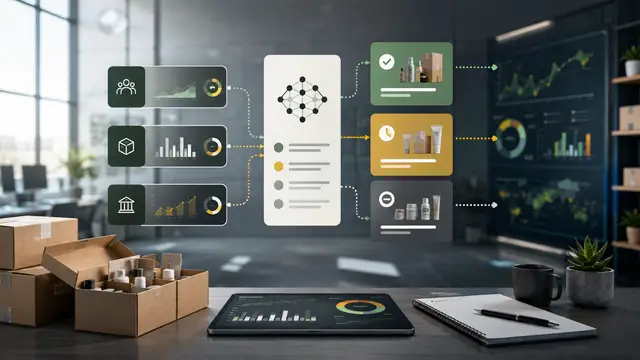
In a stronger workflow, every sample request becomes a short business case. The rep still submits the request in a familiar form or CRM action, but automation enriches it before anyone approves it. The system checks the account, opportunity, product, inventory, cost, and history. AI reads the sales rationale, compares it with known patterns, and summarizes the decision factors in plain language. Low-risk requests can proceed quickly. Exceptions can be routed to the right reviewer with the evidence already assembled.
This matters because the cost of samples is rarely limited to the product itself. There is picking labor, packaging, freight, replacement inventory, rush handling, discount expectations, follow-up time, and opportunity cost when scarce product is used for weak-fit requests. If the company sells technical products, customized kits, demo units, specialty components, or premium samples, the hidden cost can be much larger than expected.
The bigger issue is that unmanaged sample programs can teach the organization the wrong lesson. Sales may learn that the fastest way to keep a conversation alive is to send more free product. Customers may learn that samples are easy to get without clear buying intent. Operations may learn that commercial urgency always overrides planning. Finance may only see the pattern after cost has already accumulated.
Automation gives the business a better rhythm. It helps sales teams move fast when the request is sound, asks for more context when the business case is thin, and creates visibility when sample activity is becoming a substitute for disciplined qualification.
Why It Matters for Businesses
Sample programs are often treated as a sales enablement expense, but they sit at the intersection of revenue, margin, inventory, and customer experience. That makes them too important to manage casually. A business can be generous and disciplined at the same time, but only if it has a workflow that distinguishes useful selling investment from unmanaged cost.
The first business risk is margin leakage. A single sample may not matter, but repeated untracked requests can turn into a real expense line. The effect is especially painful when products have meaningful landed cost, require special handling, or include accessories that are rarely returned. The sample may be recorded as marketing expense, sales expense, inventory shrinkage, or miscellaneous adjustment, which makes the true pattern harder to see.
The second risk is inventory distortion. Samples are usually taken from saleable inventory unless the company has a dedicated sample stock process. If demand planning does not understand sample usage, the business may think customers are buying less than expected or that certain items are moving through normal sales channels. In tight supply periods, sample fulfillment can also compete with paid orders, creating service risk for customers who already committed revenue.
The third risk is inconsistent customer treatment. One rep may send a premium kit immediately, another may require a formal opportunity, and a third may avoid samples entirely because the process feels too slow. Customers experience that inconsistency as randomness. Sales leaders experience it as uneven judgment. Automation creates a more consistent decision path without forcing every request through the same slow approval queue.
The fourth risk is weak follow-up. Sending the sample is not the outcome. The outcome is a better sales conversation, a clearer product fit decision, a qualified opportunity, a renewal expansion, or a documented reason the buyer did not move forward. Without follow-up automation, sample requests become disconnected from revenue learning. The business pays for the sample but does not capture the answer.
The fifth risk is policy drift. Teams create exceptions because the real world is messy. A strategic account needs special handling. A new product launch requires a broader sampling push. A distributor program has negotiated terms. Those exceptions are normal, but they need visibility. If exceptions are not captured and reviewed, they become informal policy. AI can help classify why exceptions happen and whether they are producing commercial value.
For small and mid-sized businesses, the value is practical because the workflow can be built around existing systems. It does not require a large transformation program. The starting point can be a sample request form, CRM opportunity data, a product cost table, inventory availability, and a simple approval matrix. AI adds value by reading messy rationale fields, summarizing evidence, detecting duplicate or repeat patterns, and recommending the next action.
A useful review workflow should help answer questions like these:
- Is there an active opportunity, renewal, trial, or support case connected to the request?
- Does the requested product match the customer segment, use case, and deal value?
- Has this account or contact received similar samples recently?
- Is inventory constrained, obsolete, promotional, or high-cost?
- Does the shipping method match the urgency and commercial value?
- Is the request part of an approved campaign, launch, or distributor agreement?
- What follow-up should be scheduled after the sample is delivered?
These questions are simple, but asking them every time is hard when teams are busy. Automation makes the discipline repeatable. It also reduces emotional friction. Instead of a manager appearing to second-guess a rep, the workflow presents the decision factors consistently. The reviewer can approve, deny, modify, or ask for more detail based on the same evidence every time.
This is also a customer experience improvement. When sample requests are reviewed well, customers get the right item, the right quantity, the right documentation, and the right follow-up. They are less likely to receive an incomplete kit, a late shipment, or a product that does not fit the stated need. A controlled sample workflow can make the business feel more responsive because low-risk requests move faster and exceptions are handled with clearer context.
The important point is that AI should not be the final authority on generosity. It should be the analyst that prepares the request. Human sales and operations leaders still set strategy. Automation simply makes the cost, risk, and intent visible before the decision is made.
The Practical Automation Opportunity
The best sample request automation starts with a clear intake path. If requests arrive through email, chat, CRM notes, and hallway conversations, the business will struggle to measure anything. A lightweight form inside the CRM or sales portal is usually enough. The form should capture the account, contact, opportunity, product, quantity, needed date, shipping method, reason for request, expected next step, and whether the sample is tied to a campaign or customer commitment.
Once the intake is consistent, automation can enrich the request. The workflow can pull account tier, opportunity stage, estimated value, close date, previous sample history, open support issues, credit status, product cost, gross margin profile, inventory availability, and freight estimate. AI can then convert the raw data into a short review brief that a manager can understand in less than a minute.
A good review brief might include:
- Request summary: who wants what, by when, and why.
- Commercial context: opportunity stage, potential value, account type, and next sales action.
- Cost context: product cost, freight estimate, rush handling, and replacement risk.
- History context: prior samples, prior conversions, duplicate requests, and open follow-up.
- Policy context: whether the request fits normal rules or needs an exception.
- Recommended action: approve, approve with changes, request more detail, route to campaign owner, or decline.
This is where AI is helpful because sample rationales are rarely written in perfect fields. A rep may write, "Customer wants to compare finish options before finalizing rollout," or "Distributor needs counter display kit for new branch opening," or "Prospect asked for rush samples after demo." AI can interpret the text, identify missing context, and classify the business purpose. It can also flag vague reasoning, such as "customer requested samples," when there is no opportunity, no next step, and no prior qualification.
The workflow should use thresholds rather than treating every request the same. A low-cost standard sample tied to an active qualified opportunity might auto-approve if inventory is available and the account has no recent duplicates. A high-cost kit, expedited shipment, constrained inventory item, repeat request, or request without an opportunity can route to a manager. A strategic account exception can route to sales leadership. A campaign-related request can route to marketing or channel operations.
The approval rules do not need to be complicated at the start. They need to be explicit. For example:
- Auto-approve standard samples below a set cost when opportunity stage and next action are complete.
- Require manager review for repeat requests within a defined time window.
- Require operations review when inventory is constrained or the needed date requires rush handling.
- Require finance or sales leadership review for premium kits above a cost threshold.
- Require campaign owner review when the request uses promotional inventory.
- Require follow-up task creation for every approved request.
The follow-up task is critical. Every approved sample should create a scheduled action in the CRM. That action should ask whether the sample arrived, whether the customer evaluated it, what objections appeared, what product fit was confirmed, and what revenue outcome followed. AI can help summarize follow-up notes and link them back to future decisions. If a certain sample kit reliably advances opportunities, the business should know that. If another sample type rarely converts, the business should know that too.
The system should also create a monthly sample program review. This does not need to be a complex dashboard. It should show sample cost by segment, rep, product family, campaign, approval reason, conversion status, freight method, and exception type. AI can write a plain-language narrative explaining what changed, where cost increased, which requests produced measurable progress, and which patterns need policy adjustment.
For example, the review might reveal that rush freight is concentrated in one region because reps wait too long to submit requests before trade show meetings. That is not just a shipping issue. It is a planning issue. The business can fix it by adding event-based deadlines and automated reminders. Or the review might show that repeat samples are common for prospects without active opportunities. That suggests a qualification issue. Sales leadership can address coaching rather than simply cutting sample budget.
Governance should be built into the workflow from the start. AI recommendations should include the evidence behind the recommendation. Reviewers should be able to override the system, but the override reason should be captured. Product cost tables should be maintained by the owner who understands margin. Approval thresholds should be reviewed quarterly. The workflow should not use sensitive customer data beyond what is needed for the decision. Access should match existing sales, operations, and finance roles.
Implementation can happen in stages:
- Stage one: centralize sample intake and require opportunity, product, cost, and next-step fields.
- Stage two: enrich requests from CRM, inventory, and product cost data.
- Stage three: add AI request summaries, duplicate detection, and policy fit scoring.
- Stage four: automate routing, approval tasks, fulfillment handoff, and customer follow-up.
- Stage five: review monthly patterns and adjust thresholds based on conversion and margin outcomes.
The strongest early metric is not total sample cost reduction. Cutting samples too aggressively can hurt sales. Better metrics include percentage of requests tied to active opportunities, approval cycle time, duplicate request rate, rush shipment percentage, sample-to-next-meeting conversion, sample-to-order conversion, and average sample cost per qualified opportunity. These metrics help the business improve judgment rather than simply reduce activity.
The workflow also creates better alignment between departments. Sales keeps speed for qualified selling moments. Operations gets clearer fulfillment priority and fewer surprises. Finance gets visibility into sample cost and margin exposure before the month closes. Marketing learns which campaigns generate useful sample demand. Customer service can see what was sent and why when customers call with questions.
The practical automation opportunity is to make every free product decision visible, explainable, and connected to a commercial outcome. AI handles the messy context. Automation handles the routing and follow-up. People handle strategy, relationship judgment, and exceptions.
Business Takeaway
Sales samples can be a smart investment when they support qualified buying decisions, product confidence, distributor readiness, or customer expansion. They become expensive when they move through the business as informal favors with no consistent review, no cost visibility, and no follow-up.
An AI-assisted sample request review workflow gives companies a better operating pattern. It does not tell sales teams to stop helping customers. It helps them prove when a sample is the right move, route exceptions before cost is committed, protect constrained inventory, and learn which sample activity actually advances revenue.
The best place to start is a simple intake form, a clear approval matrix, and a required follow-up task. Add AI where judgment depends on messy context: reading the rationale, finding duplicate requests, summarizing cost and opportunity signals, and explaining why a request should move forward or pause for review. Over time, the business gains a sample program that is faster, fairer, and easier to measure.
Free product should not be invisible product. When sample requests are reviewed before they leave the building, companies protect margin while still giving sales teams a practical way to earn customer confidence.