What Happened
Field service scheduling is a constant negotiation between promises and reality. A customer expects a technician during a specific window. A dispatcher has to balance job priority, skill requirements, travel time, parts availability, overtime limits, weather, cancellations, and emergencies. The schedule may look reasonable in the morning and fragile by lunch. One job runs long, one technician calls out, one part is missing, and the rest of the day begins to slide.
Traditional scheduling tools help organize appointments, but they often struggle with the judgment that dispatchers perform all day. Which job can move without damaging the relationship? Which technician has the right certification and the shortest route? Which customer should receive a proactive update? Which open slot should be protected for urgent work? These decisions depend on live context, not only static calendar blocks.
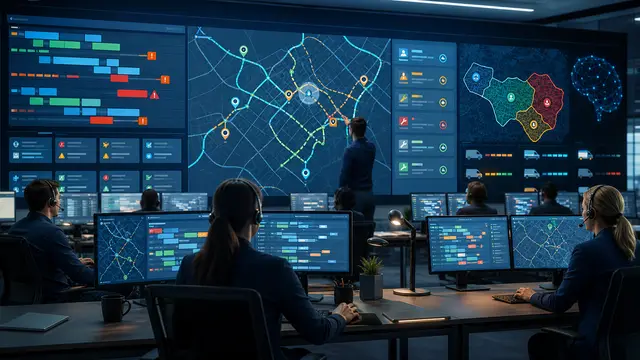
AI can act as a scheduling stabilizer by watching the day as conditions change and recommending the next best adjustment. It can compare job requirements with technician skills, travel routes, service-level commitments, customer history, parts status, and prior appointment changes. The goal is not to remove the dispatcher. The goal is to give the dispatcher a ranked set of options before the schedule breaks.
The highest value comes from early detection. Many businesses wait until a technician is already late before they notify the customer or reshuffle the route. By then, the company has fewer choices. An AI workflow can estimate the ripple effect of a delay while there is still time to act. It can suggest moving a flexible maintenance visit, assigning a nearby technician to a short job, or warning a customer with a realistic revised window.
This matters because field service is where operational complexity becomes visible to the customer. A customer does not see the dispatch board. They see whether the company keeps its appointment, communicates clearly, and sends someone who can actually solve the problem. AI-supported scheduling helps the business protect that experience under changing conditions.
The best systems are practical, not magical. They do not promise perfect routing. They make tradeoffs explicit. They show the dispatcher which appointments are at risk, why they are at risk, what options exist, and what each option may affect. That is a major improvement over manually scanning calendars, maps, job notes, and customer messages while the phone keeps ringing.
Why It Matters for Businesses
Missed or late appointments are expensive. They create repeat calls, refunds, overtime, lower technician utilization, and weaker customer trust. They also put pressure on frontline employees who have to explain delays they did not cause. A small scheduling issue can quickly become a service recovery problem.
The operational cost is often hidden in fragments. A dispatcher spends fifteen minutes reshuffling jobs. A customer service representative handles two follow-up calls. A technician drives across town because a closer match was not visible. A manager approves overtime to protect a promise that could have been adjusted earlier. Each event looks normal. Together, they reduce margin.
AI scheduling support improves both customer experience and internal capacity. It can help the business see which promise is most at risk, which action preserves the most value, and which customer needs communication now. It can also identify recurring causes of schedule instability, such as unrealistic job durations, poor parts readiness, uneven territory design, or overbooking certain skill sets.
For companies with field teams, the benefits can be concrete:
- Better appointment reliability because risks are identified before the customer window is missed.
- Higher technician productivity because assignments consider travel, skills, and job readiness together.
- Lower overtime because schedule recovery starts earlier in the day.
- Fewer repeat visits because technicians are matched to the work they can complete.
- Stronger customer communication because updates are triggered by evidence, not panic.
A scheduling stabilizer also helps managers coach the business. If the AI repeatedly flags the same job type as running long, the issue may be the estimate, not the technician. If certain territories always require last-minute adjustments, the coverage model may need attention. If customer cancellations cluster around poor reminder timing, the communication workflow can be improved.
The most important point is that field scheduling should not be treated as a static calendar. It is a live operating system. AI gives that system better sensing and faster scenario analysis.
The Practical Automation Opportunity
A practical AI field scheduling workflow starts with clean operational signals. The system needs job type, expected duration, required skills, service priority, parts readiness, customer location, promised time window, technician start point, technician skills, current job status, and any contractual commitments. It also needs a way for dispatchers to record why a recommendation was accepted or rejected.
The workflow can run in three layers. The first layer is monitoring. It watches active jobs, travel estimates, appointment windows, and schedule changes. The second layer is prediction. It identifies which appointments are likely to slip if nothing changes. The third layer is recommendation. It presents options with tradeoffs.
A useful recommendation might say that the 2 p.m. repair is at risk because the assigned technician is still on a complex job and travel time has increased. It might suggest assigning a nearby technician with the right skill, moving a flexible inspection to tomorrow, or notifying the customer with a revised window. Each option should include the expected impact on other jobs.
The dispatcher remains the decision maker because local context matters. A customer may be a high-value account. A technician may have informal knowledge that the system does not know. A job may be more sensitive than the category suggests. AI should make the decision easier, not pretend the decision is purely mathematical.
Useful automations include:
- Morning risk preview for jobs that may be under-scoped or missing parts.
- Real-time delay alerts when active work threatens later appointments.
- Suggested technician swaps based on skills, route proximity, and customer priority.
- Customer update drafts that explain timing clearly without overpromising.
- End-of-day analysis showing which assumptions caused the most schedule changes.
The business should define guardrails early. For example, the system should not automatically move emergency jobs, high-priority customers, warranty commitments, or appointments with strict access windows unless a dispatcher approves. It should also avoid optimizing only for travel time if that damages customer trust or technician workload balance.
Measurement should be tied to outcomes. Track on-time arrival rate, same-day completion rate, overtime hours, dispatcher manual touches, customer reschedule calls, and repeat visits. Also track recommendation quality. If dispatchers frequently reject suggestions, the business should inspect whether the model lacks data or whether the rules do not reflect reality.
Customer communication templates should be tested carefully. A fast update is useful only if it is accurate, specific, and realistic about the next commitment.
Customer communication templates should be tested carefully. A fast update is useful only if it is accurate, specific, and realistic about the next commitment.
Customer communication templates should be tested carefully. A fast update is useful only if it is accurate, specific, and realistic about the next commitment.
Customer communication templates should be tested carefully. A fast update is useful only if it is accurate, specific, and realistic about the next commitment.
Customer communication templates should be tested carefully. A fast update is useful only if it is accurate, specific, and realistic about the next commitment.
Customer communication templates should be tested carefully. A fast update is useful only if it is accurate, specific, and realistic about the next commitment.
Customer communication templates should be tested carefully. A fast update is useful only if it is accurate, specific, and realistic about the next commitment.
Customer communication templates should be tested carefully. A fast update is useful only if it is accurate, specific, and realistic about the next commitment.
Customer communication templates should be tested carefully. A fast update is useful only if it is accurate, specific, and realistic about the next commitment.
Customer communication templates should be tested carefully. A fast update is useful only if it is accurate, specific, and realistic about the next commitment.
Customer communication templates should be tested carefully. A fast update is useful only if it is accurate, specific, and realistic about the next commitment.
Customer communication templates should be tested carefully. A fast update is useful only if it is accurate, specific, and realistic about the next commitment.
Customer communication templates should be tested carefully. A fast update is useful only if it is accurate, specific, and realistic about the next commitment.
Customer communication templates should be tested carefully. A fast update is useful only if it is accurate, specific, and realistic about the next commitment.
Customer communication templates should be tested carefully. A fast update is useful only if it is accurate, specific, and realistic about the next commitment.
Customer communication templates should be tested carefully. A fast update is useful only if it is accurate, specific, and realistic about the next commitment.
Customer communication templates should be tested carefully. A fast update is useful only if it is accurate, specific, and realistic about the next commitment.
Business Takeaway
AI can make field service scheduling more stable by detecting appointment risk earlier and giving dispatchers better recovery options. The value is not a perfect automated calendar. The value is a practical decision layer that connects skills, routes, job readiness, and customer promises before small disruptions spread through the day.