What Happened
Customer service teams rarely lose trust because one issue happened. Trust usually erodes
because the business reacts too slowly, misses the context behind the complaint, or treats a
recoverable service moment like an ordinary ticket. A late delivery, billing confusion,
failed appointment, product defect, or unresolved support case can move from private
frustration to public review very quickly. The signals are already inside the business, but
they are split across inboxes, CRM notes, call transcripts, order records, chat logs, and
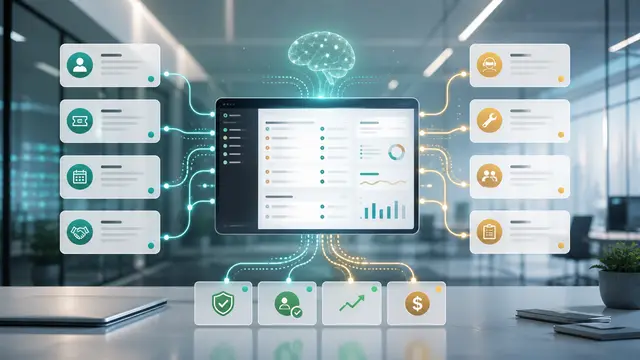
field service updates. AI gives business teams a practical way to assemble those signals
into a service recovery playbook before the customer feels ignored.
The playbook is not a replacement for human judgment. It is a structured operating layer
that watches for risk, summarizes the customer situation, recommends the next responsible
action, and keeps managers aware of promises that need follow-through. A good service
recovery workflow does three things well. It recognizes customers who are likely to become
vocal detractors, gives employees the full story without making them search across systems,
and turns recovery into measurable work instead of individual heroics. That combination
matters because the best recovery moments are usually time sensitive.
Many companies already have escalation rules, but those rules are often built around ticket
age or account size alone. That misses important context. A small customer who experienced
three avoidable handoffs may deserve faster recovery than a large account with a routine
question. A customer who has already called twice, opened a chat, and received a partial
refund may need a different response than a first-time requester. AI can score the situation
using patterns that static queues rarely capture, including sentiment changes, broken
promises, repeated channel switching, and mismatches between what the customer was told and
what actually happened.
For LJ Web Management clients and similar service businesses, this is an accessible
automation opportunity because the inputs do not require exotic data science. The starting
point is disciplined workflow design. Identify the moments that create public
dissatisfaction, gather the systems where those signals live, define what counts as
recoverable risk, and build a review queue that routes the right case summary to the right
person. The goal is not to prevent every negative review. The goal is to make preventable
disappointments visible while the business still has time to act.
Why It Matters for Businesses
Negative reviews are expensive because they influence prospects before sales ever gets a
conversation. One unresolved service issue can affect local search behavior, referral
confidence, renewal decisions, and the willingness of customers to expand. A business may
spend heavily on marketing, website conversion, and sales follow-up, then lose momentum
because service recovery is informal. AI-assisted recovery protects that investment by
connecting post-sale experience to reputation management in a practical way.
The operational value is also internal. Without a recovery workflow, managers often hear
about issues after the customer has already complained publicly or threatened to leave.
Employees may know fragments of the story, but no one owns the complete recovery plan. The
result is duplicate apologies, vague updates, and rushed concessions. An AI playbook gives
the team a shared version of the case: what happened, what was promised, what is still
unresolved, who should act next, and what outcome would likely restore confidence.
Financial impact is measurable when the workflow is designed with clear outcomes. Track
saved renewals, reduced refunds, fewer repeat contacts, faster manager review, and review
sentiment after recovery actions. Also track avoided waste. If support agents spend ten
minutes searching across systems for every heated case, the cost compounds quickly. AI
summaries and routing can give that time back while improving consistency. The business does
not need a perfect model to see gains. It needs a reliable process that catches recoverable
risk earlier than the old queue did.
There is a governance benefit as well. Service recovery can become risky when employees
improvise refunds, credits, or commitments without context. A playbook can include approval
thresholds, recommended language, escalation owners, and documentation rules. That keeps
recovery generous but controlled. It also creates a learning loop. When the same issue
appears repeatedly, the business can use the pattern to fix root causes in onboarding,
billing, dispatch, fulfillment, or product communication.
The Practical Automation Opportunity
- Connect signals from support tickets, CRM notes, chats, call summaries, invoices, order
status, and appointment history into a daily recovery queue. - Ask AI to produce a concise
case brief: customer history, recent promises, sentiment trend, open blockers, likely
business risk, and recommended next action. - Route cases by recovery type, not just
severity. Billing confusion, delivery failure, service miss, technical issue, and
relationship risk need different owners. - Add approval logic for credits, refunds,
expedited work, or executive outreach so recovery does not become uncontrolled discounting.
- Close the loop by logging the recovery outcome and tagging root causes for future
prevention.
The best starting workflow is a morning service recovery brief. Every business day, AI
reviews new and aging customer interactions, flags cases with risk signals, and sends a
short list to the service leader. Each item includes the customer, issue summary, last
promise, next recommended action, owner, and due time. The leader confirms or edits the
recommendation, then the system creates tasks and reminders. That simple cadence turns
scattered frustration into accountable work.
Teams should be careful with automation tone. AI can draft messages, but sensitive recovery
communication should be reviewed by a person who understands the relationship. The system
should suggest empathy, clarity, and specific next steps rather than producing generic
apologies. It should also avoid making promises that operations cannot keep. The workflow is
strongest when it combines AI speed with human authority.
Implementation can start small. Choose one high-impact service category, such as missed
appointments or billing disputes. Define five to seven risk signals. Build the queue. Review
it daily for two weeks. Compare repeat contacts, escalation age, and customer feedback
before and after. Once the team trusts the process, extend it to more categories. This
staged approach keeps the automation practical and prevents the business from trying to
model every complaint at once.
A useful service recovery playbook also needs a clear definition of recovery stages. The
first stage is detection, where the system finds risk signals such as repeated contacts,
negative sentiment, missed response commitments, failed delivery milestones, refund
language, or a customer asking for a manager. The second stage is diagnosis, where AI
assembles the timeline and separates facts from assumptions. The third stage is decision,
where a human owner chooses the recovery action. The fourth stage is follow-through, where
automation creates tasks, reminders, and confirmations until the customer commitment is
actually completed. The final stage is prevention, where root causes are tagged and reviewed
by operations. Treating recovery as a lifecycle prevents the workflow from becoming only
another alert queue.
Businesses should also define what the AI should never do. It should not approve a credit
without policy support. It should not promise a shipment date, technical fix, or refund
unless that action has been validated by the responsible system or person. It should not
bury uncertainty in confident language. A good recovery brief says what is known, what is
missing, and what decision is needed. This makes the automation more trustworthy for
managers and safer for customer-facing employees.
The operating cadence matters as much as the technology. A daily recovery review works for
many teams, but urgent signals may need same-day routing. For example, a high-value customer
mentioning cancellation, a public complaint with an unresolved ticket, or a safety-related
service issue should bypass the daily digest and alert the responsible leader immediately.
Other cases can wait for the morning queue. By separating urgent escalations from routine
recovery opportunities, the workflow avoids alert fatigue while still protecting the moments
that matter most.
Finally, the playbook should include customer-facing recovery options that are practical for
the business. Some cases need a clear status update. Some need a corrected invoice,
replacement appointment, expedited shipment, senior review, or documented apology. Some need
internal cleanup before any customer message is sent. AI can recommend the likely option,
but the company should maintain a menu of approved responses with ownership, cost range, and
documentation rules. That turns empathy into executable work.
Implementation should start with a small policy workshop. Bring together service, sales,
operations, finance, and whoever owns customer communications. Define which signals create
recovery review, which customer tiers need faster routing, which concessions require
approval, and which cases should become root-cause investigations. This workshop is not
administrative overhead. It is how the company translates values into repeatable action. AI
can only execute well when the business has decided what good recovery looks like.
After launch, review the queue quality weekly. Ask whether the right cases surfaced, whether
any urgent cases were missed, whether recommendations were useful, and whether owners
completed follow-through on time. These reviews should be short and practical. The purpose
is to tune thresholds, add missing data sources, remove noisy alerts, and keep the workflow
aligned with actual service risk. The best service recovery systems improve through
operating discipline, not one-time configuration.
Business Takeaway
A negative review is often the final visible symptom of an issue the business could have
seen earlier. An AI service recovery playbook helps teams find those moments while action
still matters. It does not remove accountability from people. It gives them better timing,
better context, and a cleaner path to repair trust before one customer problem becomes a
public reputation problem.