What Happened
A growing business can send conflicting messages to the same customer without anyone making
a dramatic mistake. A marketing nurture email promises a new offer. A customer success
manager sends a renewal reminder. A support agent answers an open case with a workaround. A
billing notice goes out because an invoice aged overnight. Each message may be accurate
inside its own system, yet the combined customer experience can feel careless, noisy, or
contradictory.
The practical issue is not writing quality. It is coordination quality. Most customer-facing
systems were designed to help a team complete its own work, not to inspect the full
communication picture before another message leaves the business. CRM tasks, help desk
threads, marketing automations, billing notices, implementation updates, and website chat
follow-ups often run on different schedules. The customer sees one company. The systems see
separate queues.
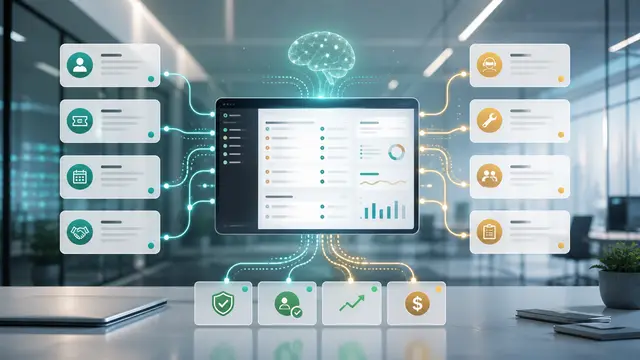
An AI customer communication collision check is a pre-send review that asks a simple
question before messages go out: does this customer already have an active condition that
should change, delay, personalize, or suppress this message? The check does not need to
replace the tools teams already use. It can sit between systems as a review layer that
gathers recent context, classifies risk, and routes exceptions to the right owner.
This workflow is especially useful when the company has multiple customer touchpoints but
limited time for manual coordination. It can review open support cases, renewal stage, order
status, payment conditions, recent complaints, delivery delays, implementation milestones,
and account ownership notes. The output is not a generic customer score. It is a practical
decision: send as planned, hold for review, adjust the message, combine messages, or
escalate to a human owner.
Why It Matters for Businesses
Communication collisions are expensive because they create doubt. A customer who receives a
sales promotion while waiting on an unresolved service issue may wonder whether the company
understands their situation. A buyer who gets three separate updates from three departments
may assume internal teams are not aligned. A customer who receives a payment reminder after
a dispute was already acknowledged may lose confidence in the billing process.
The damage is often hidden in small moments. It rarely appears as one obvious failure in a
dashboard. Instead, it shows up as slower renewals, extra calls, lower response rates,
avoidable escalations, and more time spent explaining what the business meant. Teams then
compensate with more meetings, longer notes, and manual Slack checks. That makes the process
feel controlled, but it does not scale.
The value of AI is its ability to interpret messy context quickly. Rules can catch simple
conflicts, such as do not send a satisfaction survey while a critical case is open. AI can
add judgment around nuance, such as recognizing that an order delay, a frustrated support
tone, and an upcoming renewal combine into a sensitive outreach moment. The automation
should not make final relationship decisions in isolation, but it can make risk visible
before the customer experiences the mismatch.
The measurable gains are straightforward. Businesses can reduce avoidable escalations,
improve campaign suppression quality, increase renewal preparation discipline, and shorten
the time teams spend checking context manually. More importantly, they can make customer
communication feel intentional without requiring every department to inspect every system
before doing routine work.
The Practical Automation Opportunity
Start by defining what counts as a collision. Common examples include promotional messages
during unresolved service issues, renewal requests during open implementation delays,
billing reminders during active invoice disputes, onboarding tasks after a project pause,
and customer satisfaction surveys immediately after a negative experience. Keep the first
list narrow enough that teams trust it.
Next, map the minimum context needed. A useful first version might read from the CRM, help
desk, billing system, marketing platform, and order management tool. It should not pull
every field. It should gather the recent signals that change communication judgment: active
cases, sentiment, account stage, open balances, pending deliveries, renewal date, owner, and
last outbound message.
The AI layer can then summarize the customer state and classify the planned message. It can
produce a short decision note such as hold campaign email because open priority case and
unresolved delivery delay create high mismatch risk. For lower risk conditions, it can
suggest a personalization note or a bundled communication plan.
Build the workflow around action, not insight. A collision check should update suppression
lists, create review tasks, notify account owners, add notes to the CRM, and release safe
messages automatically. If every flagged item becomes a manual research project, the system
will be ignored.
Useful controls include a reason code for every hold, a time limit so messages are not
suppressed forever, human override options, and weekly reporting on false positives. The
team should review examples where the AI held a message that should have sent and examples
where a message sent despite later causing confusion. That feedback is how the system
becomes more precise.
- Define the decision the workflow should make before selecting technology.
- Connect only the evidence sources that materially change that decision.
- Require reason codes so teams can understand and improve the automation.
- Measure avoided rework, faster cycle time, risk reduction, and recovered value.
Business Takeaway
A customer communication collision check helps a business act like one company instead of
several disconnected queues. It does not require a massive customer data platform project to
begin. It requires a clear list of high-risk communication conflicts, access to a few
reliable signals, and an automation path that turns context into a send, hold, adjust, or
escalate decision.
For many businesses, the best first use case is not producing more customer messages. It is
preventing the wrong message from going out at the wrong time. That is a practical,
measurable way to use AI for trust, retention, and operational discipline.
A useful implementation detail is to keep a short weekly review of the exceptions the workflow created. The review should ask which alerts protected a customer promise, which alerts were noise, which source system needs cleanup, and which owner was missing from the process. That operating habit prevents the automation from becoming another queue that people distrust.
A useful implementation detail is to keep a short weekly review of the exceptions the workflow created. The review should ask which alerts protected a customer promise, which alerts were noise, which source system needs cleanup, and which owner was missing from the process. That operating habit prevents the automation from becoming another queue that people distrust.
A useful implementation detail is to keep a short weekly review of the exceptions the workflow created. The review should ask which alerts protected a customer promise, which alerts were noise, which source system needs cleanup, and which owner was missing from the process. That operating habit prevents the automation from becoming another queue that people distrust.
A useful implementation detail is to keep a short weekly review of the exceptions the workflow created. The review should ask which alerts protected a customer promise, which alerts were noise, which source system needs cleanup, and which owner was missing from the process. That operating habit prevents the automation from becoming another queue that people distrust.
A useful implementation detail is to keep a short weekly review of the exceptions the workflow created. The review should ask which alerts protected a customer promise, which alerts were noise, which source system needs cleanup, and which owner was missing from the process. That operating habit prevents the automation from becoming another queue that people distrust.
A useful implementation detail is to keep a short weekly review of the exceptions the workflow created. The review should ask which alerts protected a customer promise, which alerts were noise, which source system needs cleanup, and which owner was missing from the process. That operating habit prevents the automation from becoming another queue that people distrust.
A useful implementation detail is to keep a short weekly review of the exceptions the workflow created. The review should ask which alerts protected a customer promise, which alerts were noise, which source system needs cleanup, and which owner was missing from the process. That operating habit prevents the automation from becoming another queue that people distrust.
A useful implementation detail is to keep a short weekly review of the exceptions the workflow created. The review should ask which alerts protected a customer promise, which alerts were noise, which source system needs cleanup, and which owner was missing from the process. That operating habit prevents the automation from becoming another queue that people distrust.
A useful implementation detail is to keep a short weekly review of the exceptions the workflow created. The review should ask which alerts protected a customer promise, which alerts were noise, which source system needs cleanup, and which owner was missing from the process. That operating habit prevents the automation from becoming another queue that people distrust.
A useful implementation detail is to keep a short weekly review of the exceptions the workflow created. The review should ask which alerts protected a customer promise, which alerts were noise, which source system needs cleanup, and which owner was missing from the process. That operating habit prevents the automation from becoming another queue that people distrust.