What Happened
Returned mail looks small because each individual envelope, postcard, invoice, renewal notice, tax form, welcome packet, product catalog, statement, or compliance letter usually creates a modest interruption. Someone receives a tray of mail from the carrier. Someone scans the yellow sticker. Someone adds a note to a customer account. Someone tries to decide whether the record belongs to sales, billing, fulfillment, support, or compliance. The problem is that most businesses treat those events as isolated clerical tasks instead of a recurring operating signal.
Bad addresses rarely stay contained. A billing address that fails in accounts receivable may also be the address used by the CRM, the ecommerce platform, the service dispatch system, the shipping tool, the warranty database, the customer portal, and the marketing list. When the returned mail event is handled only in the department that discovered it, the rest of the business continues working from stale data. Sales sends follow-up material to the same invalid location. Finance waits for payment from a customer who never received the statement. Service teams schedule visits with incomplete site information. Marketing pays to mail future campaigns to records that have already proven unreliable.
The bigger issue is timing. Most returned mail workflows are too slow to protect revenue because the correction happens after the missed communication has already created a downstream problem. A returned invoice becomes a collections delay. A returned renewal notice becomes a surprise cancellation risk. A returned product notice becomes a customer trust issue. A returned tax or compliance document becomes a control gap. Teams then spend more time explaining the failure than they would have spent fixing the address signal earlier.
AI and automation can change the shape of this work. The goal is not to replace address validation services or postal rules. The goal is to build a practical recovery workflow that turns each returned mail event into a structured record, routes it to the right owner, checks connected systems for the same stale information, and measures whether the correction actually happened. Instead of a pile of envelopes becoming a manual cleanup chore, it becomes a daily exception queue with business context.
In a well-designed workflow, a returned mail item is captured once. The system reads or records the customer name, account number, mailing type, source department, returned reason, received date, and any carrier-provided correction clue. AI helps classify the event, match it to the most likely customer record, summarize the business impact, and recommend the next action. Automation then creates the right task, updates a controlled review queue, alerts the owner, and keeps a record of what was changed.
This matters because address quality is not just a database hygiene issue. It is a revenue, service, compliance, and customer experience issue. A company can have strong sales teams, polished campaigns, and efficient support processes, but if customer location data decays quietly, the operation starts to leak effort in places leaders do not immediately see.
Why It Matters for Businesses
Returned mail exposes a basic truth about business data: the same customer fact is often copied into many systems, but accountability for correcting that fact is unclear. The billing team may own invoice delivery. The sales team may own relationship notes. Operations may own job site details. Marketing may own campaign lists. Customer service may own portal contact records. When a returned item appears, every team can reasonably assume someone else has the master record.
That ambiguity creates measurable cost. Postage and printing waste are only the visible part. The larger cost comes from delayed cash, duplicate outreach, preventable service calls, customer frustration, avoidable write-offs, and time spent reconciling why one system says a customer is reachable while another says communication failed. For companies with recurring revenue, field service, wholesale distribution, healthcare administration, construction, manufacturing, professional services, or local service territories, small address errors can become expensive because they affect both communication and delivery.
AI is useful here because returned mail decisions require context. A human does not simply need to know that an address failed. They need to know whether the customer is active, whether there is an open invoice, whether a renewal is coming up, whether an order is in transit, whether the account has a known relocation note, whether the contact has recently engaged through email, and whether the address appears in multiple related records. That is exactly the kind of cross-system interpretation that a practical AI workflow can support.
The workflow should not blindly overwrite customer data. Address changes need controls because a bad correction can be worse than no correction. An automation may suggest that two customer records refer to the same company, but someone still needs to approve a merge if the risk is high. AI may identify a likely corrected address from a carrier sticker or customer email, but the system should preserve evidence, confidence level, and source. The point is to accelerate informed correction, not to turn a data issue into an uncontrolled update.
Businesses should also care because returned mail is an early warning indicator. If a particular customer segment, sales region, acquisition channel, branch, or onboarding process produces more returned mail than expected, the issue may not be random. It may reveal that forms are collecting incomplete information, sales reps are entering temporary locations as permanent addresses, ecommerce checkout is allowing weak address inputs, or customer service is updating one platform while another stays stale. The returned item is a symptom. The root cause may sit upstream.
A good returned mail recovery workflow helps leaders see patterns such as:
- Which departments generate the most returned communications.
- Which systems contain the stale address after one system has already been corrected.
- Which customer types produce repeat address failures.
- Which returned mail categories create delayed payment, missed appointments, or extra support contacts.
- Which correction owners close tasks quickly and which queues stall.
- Which root causes should be fixed in forms, CRM rules, onboarding scripts, or integration logic.
This is why the workflow should include reporting from the start. Without reporting, the business may clear returned mail faster but still miss the operational lesson. With reporting, returned mail becomes a source of prevention. Leaders can see whether address quality is improving, whether the same records keep failing, and whether specific upstream processes need redesign.
There is also a customer trust dimension. A customer should not have to correct the same address three times because billing, service, and sales use different records. They should not receive late fees because the company mailed an invoice to an old location. They should not miss an important notice because one team updated a contact record but another system kept mailing the previous address. Address correction is a small experience, but repeated failure sends a clear message: the company is not coordinated.
The Practical Automation Opportunity
The best starting point is a daily returned mail intake queue. This does not require a large transformation. It requires a consistent way to capture every returned item, classify it, connect it to customer context, and assign the correction path. The workflow can begin with a shared form, a scanning station, a mailbox process, or a back-office queue. What matters is that the returned item becomes structured data rather than an envelope passed from desk to desk.
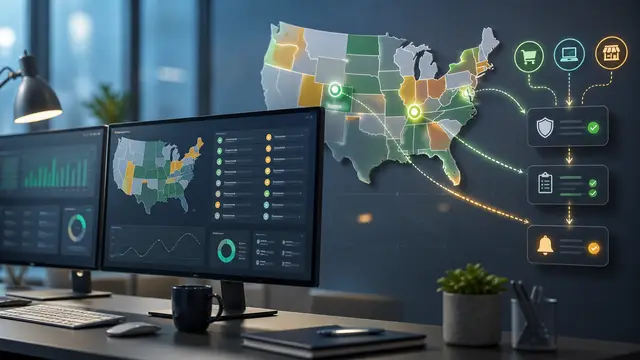
A practical AI returned mail recovery workflow can follow this sequence:
- Capture the returned item with date received, mail type, department, visible customer details, and returned reason.
- Use AI to summarize the item and suggest the most likely customer, account, invoice, order, project, or location record.
- Check connected systems for matching customer records and identify where the same address appears.
- Score the business impact based on open invoices, active orders, renewal timing, service appointments, contract status, or compliance category.
- Route the task to the owner who can verify and approve the correction.
- Record the evidence, decision, correction source, changed systems, and unresolved exceptions.
- Report recurring patterns by department, source system, customer segment, and root cause.
The AI layer should be designed as a decision assistant. It can read a scanned mail image or manual entry, extract useful clues, compare them with CRM and billing records, flag likely duplicates, and explain why it believes a specific record is involved. It can also prepare customer-friendly outreach drafts when a new address must be confirmed. For example, if the system finds that an invoice was returned and the customer has an active email contact, AI can draft a short message asking the customer to confirm the billing address while also noting the affected invoice number for the internal team.
The automation layer should handle repeatable movement. It should create tasks, assign owners, set due dates, update queue status, notify stakeholders, and push approved corrections into systems through governed connectors. It should also prevent silent closure. A returned mail item should not be marked resolved simply because someone sent an email. It should close only when the address issue has a documented outcome, such as corrected, customer confirmed no change, account inactive, duplicate merged, unable to verify, or not business critical.
Controls are important because address changes can affect billing, delivery, tax, service coverage, and legal notice. The workflow should distinguish between low-risk and high-risk updates. A corrected marketing mailing address may require a lighter review than a billing address tied to open receivables or a service location tied to safety requirements. AI can help classify risk, but the rules should be explicit.
Useful control points include:
- Require approval before changing a billing, legal, tax, or service location address.
- Preserve the original address, returned reason, source document, and correction evidence.
- Separate address suggestion from address update so the system does not overwrite records without review.
- Flag conflicts where different systems show different versions of the same customer address.
- Require a merge review when the returned item reveals duplicate customer records.
- Log every system touched by the correction.
- Reopen the case if another returned item arrives for the same customer within a defined period.
The workflow should also define ownership. Many address recovery processes fail because the exception lands between teams. A simple ownership matrix prevents that:
- Billing owns returned invoices, statements, tax forms, and payment notices.
- Sales or account management owns customer relationship mail and renewal outreach.
- Fulfillment owns shipping address problems tied to active orders.
- Service operations owns job site, dispatch, and appointment location issues.
- Compliance owns regulated notices and required documentation.
- Data operations owns duplicates, synchronization failures, and master data conflicts.
Each owner should see the same business context. The task should not say only, "returned mail received." It should show the customer, affected system, likely impact, recent account activity, open work, suggested correction path, and evidence. That context is what turns a back-office task into a faster business decision.
Measurement should be simple and operational. Track the number of returned items received, average time to first review, average time to confirmed correction, percentage resolved by category, percentage requiring customer outreach, repeat returned mail rate, cash tied to returned invoices, active orders affected, and systems updated per case. Over time, those metrics reveal whether the process is reducing waste or simply organizing it.
Implementation can start in a modest way. A business can begin with one mail type, such as returned invoices, because the revenue impact is easy to understand. Once the team proves the queue, the same structure can expand to renewal notices, product notices, customer onboarding packets, service appointment mailers, and compliance documents. The key is to build the operating habit before trying to automate every edge case.
For companies that already use CRM, accounting software, help desk tools, and email automation, the integration path is usually available. The first version can rely on a shared intake form and task queue. The second version can add record matching, AI summaries, and system checks. The third version can add governed updates, duplicate detection, customer outreach drafts, and management dashboards. Each step should reduce manual searching and increase confidence in the correction.
The practical opportunity is not glamorous, but it is valuable. Returned mail is a recurring signal that the business already receives. Most companies simply fail to convert it into structured action. AI makes the signal easier to interpret. Automation makes the follow-through reliable. Governance keeps the correction controlled.
Business Takeaway
Returned mail is not just a mailroom problem. It is a visible sign that customer data has drifted away from operational reality. When that signal is handled manually and locally, the same bad address can keep draining revenue, slowing service, confusing customers, and weakening reports across the business.
An AI returned mail recovery workflow gives companies a practical way to close the loop. Capture each returned item once, match it to the right customer context, route it to a clear owner, verify the correction, update connected systems with evidence, and measure the root causes behind repeat failures. Start with one high-value category, prove the process, and expand from there.
The business value comes from preventing repeated waste. Fewer missed invoices, fewer failed notices, fewer duplicate corrections, fewer customer frustrations, and cleaner records all compound. A returned envelope may look like a small exception, but handled correctly, it becomes a useful operating signal that helps the company protect cash, service quality, and customer trust.