What Happened
Product demonstrations produce some of the richest sales information a company will ever collect, yet much of that information disappears into scattered notes, half-filled CRM fields, and follow-up emails written from memory. A prospect explains the current process, names the systems involved, reacts to specific features, asks careful questions, and reveals who else must be convinced. The seller often leaves the call with a strong sense of the opportunity, but that sense is hard to transfer into the next step with precision. By the time the account executive updates the CRM, asks a sales engineer for help, and drafts a recap, the context has already started to thin out.
The problem is not that sales teams lack effort. The problem is that product demo follow-up requires translation. A live conversation has to become a buyer-specific action plan. Objections have to become proof points. Feature interest has to become a sequence of resources. Technical concerns have to become internal tasks. Buying committee clues have to become stakeholder strategy. When that translation happens manually, every seller creates a slightly different version of the truth. Some write excellent recaps. Some send generic thank-you emails. Some remember to loop in customer success or solutions engineering. Others move quickly to the next meeting and leave valuable buying signals behind.
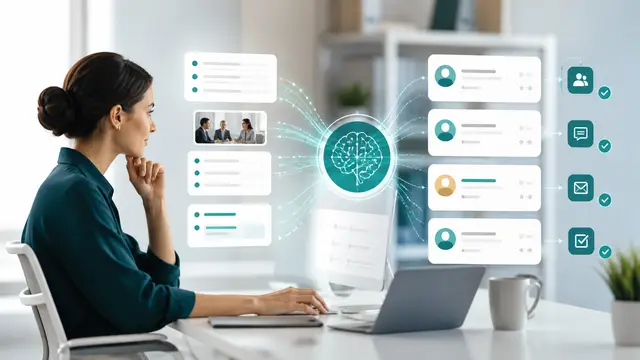
AI and automation give businesses a practical way to close that gap without forcing sellers into more administration. The goal is not to replace the judgment of the salesperson. The goal is to capture the evidence from the demo, organize it consistently, and propose next actions that match what the buyer actually said. A well-designed workflow can turn notes, call summaries, meeting transcripts, CRM fields, and product usage references into a follow-up package that is specific, timely, and easier to manage.
Why It Matters for Businesses
Demo follow-up matters because speed alone is not enough. Many companies already push sellers to follow up quickly after a meeting, but a fast generic email can weaken momentum. Buyers notice when the recap ignores their priorities or sends materials that do not match the conversation. A finance leader who asked about cost controls does not need the same message as an operations manager who asked about workflow routing. A technical evaluator who raised integration risk needs different next steps from an executive sponsor who wants a business case.
The business cost of weak follow-up shows up in several places. Opportunities stall because the next step is vague. Sales engineers spend time reconstructing context that was already discussed. Managers review pipeline updates that say a deal is progressing but do not explain the evidence. Marketing content is sent randomly instead of being matched to buying stage. Customer success gets introduced too late, after implementation questions have already created anxiety.
A stronger follow-up process improves both revenue quality and team capacity. It helps sellers keep promises made during the call. It gives managers a clearer view of deal health. It makes handoffs to technical and implementation teams more reliable. It also creates a better buyer experience because each touch feels connected to the last conversation.
The measurable impact can be tracked in practical ways:
- Time from demo completion to first meaningful follow-up.
- Percentage of follow-up messages that include buyer-specific priorities.
- Number of internal tasks created from demo commitments.
- Reduction in stale opportunities after demos.
- Improvement in next-meeting conversion rates.
- Fewer repeated questions during technical validation.
The deeper value is consistency. A business should not depend on each seller having perfect recall, perfect note habits, and unlimited time after every demo. AI can provide the first draft of structure so sellers spend more time exercising judgment and less time rebuilding the conversation.
The Practical Automation Opportunity
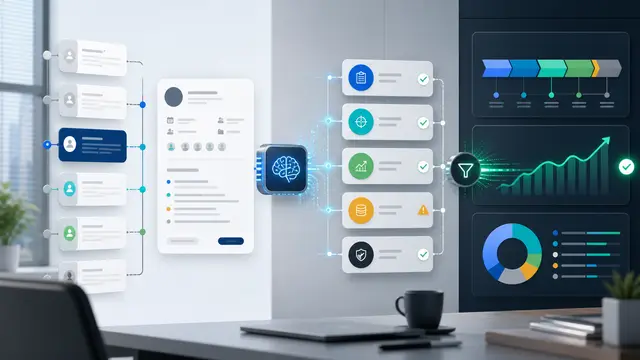
A practical automation starts with a clear intake point. That intake may be a meeting transcript, a call recording summary, seller notes, or a structured demo form. The workflow should collect the buyer name, company, opportunity stage, products discussed, pain points, objections, stakeholders mentioned, promised deliverables, and target timeline. If the team already uses a CRM, those fields should be read from and written back to the CRM rather than copied into a separate tool that no one maintains.
The AI layer should classify the demo into a few useful categories. Was the conversation exploratory, technical validation, executive alignment, procurement preparation, or final confirmation? Which pains were explicit and which were inferred? Which stakeholders were active, absent, supportive, skeptical, or unknown? Which requested follow-ups were commitments rather than casual interest? This classification should produce a concise set of recommendations, not a long narrative that the seller has to decode.
The automation can then create a follow-up kit:
- A buyer-specific email draft that references the stated business priorities.
- A task list for the seller, sales engineer, and manager.
- Suggested content assets mapped to each concern.
- CRM field updates for pain points, objections, competitors, and next steps.
- A risk note when the demo reveals missing stakeholders or unclear success criteria.
- A reminder if a promised item has not been sent within the target window.
Governance is important. The system should not send messages without human review unless the use case is very low risk and the language is tightly controlled. Sellers should approve or edit the follow-up. Managers should be able to see when AI suggestions are rejected, because repeated rejection can reveal that the prompts, data, or sales process need adjustment.
Start with one demo motion before expanding. For example, use the workflow only for mid-market product demos where a transcript and CRM opportunity exist. Measure whether follow-up quality improves, whether sellers save time, and whether the next step becomes clearer. Once the process is trusted, extend it to enterprise demos, renewal demos, partner demos, or implementation discovery calls.
Implementation should include a clean exception path. If the transcript is missing, the seller should be able to submit manual notes. If the opportunity has no next meeting, the workflow should ask whether the goal is executive alignment, technical validation, pricing discussion, or disqualification. If the buyer raised a concern that has no approved content asset, the system should create a content gap task rather than recommending a poor substitute. These small guardrails keep the automation useful in real selling conditions.
Data quality also deserves ownership. Meeting titles, contact roles, opportunity stages, and product names must be clean enough for the workflow to classify correctly. A weekly report showing incomplete demo records can help managers coach teams before the process breaks. The automation is not a replacement for CRM discipline. It is a reason to make CRM discipline easier and more valuable.
Before scaling this workflow, document the baseline. Capture current cycle time, rework, escalation volume, missed commitments, and the decisions managers wish they had seen earlier. Then pilot the automation with a small group, review exceptions weekly, and tune the rules based on evidence. The strongest results usually come from a narrow workflow that teams trust, not a broad launch that produces more alerts than decisions.
A useful pilot can be run without changing the entire sales process. Pick one product demo type, one opportunity stage, and one sales team. Require the workflow to produce a recap, CRM update suggestions, internal task list, and asset recommendations. Review ten outputs with sales leadership and the participating sellers. Look for practical signals: Did the summary capture the buyer's real priorities? Did it avoid unsupported claims? Did it identify promised follow-up items? Did it recommend content that a seller would actually send? Did it reduce the time needed to prepare a strong next touch?
The workflow should also support disqualification. Not every demo deserves aggressive follow-up. If the buyer has no clear pain, no owner, no timing, and no next decision step, AI can help the seller prepare a respectful close-out or nurture path. That protects sales capacity. A disciplined follow-up system does not push every prospect forward. It helps the team decide which opportunities deserve immediate action and which should be paused until the buyer shows stronger intent.
Treat the first month as supervised automation. Ask sellers to compare the AI-prepared follow-up with what they would have written manually, then capture the edits they make most often. If sellers routinely add pricing context, stakeholder nuance, or implementation concerns, add those prompts and fields to the workflow. If they remove generic claims, tighten the source rules. The workflow improves fastest when the people closest to the buyer can correct it without opening a technical project.
Business Takeaway
Product demo notes are not just meeting records. They are a map of buyer intent, risk, urgency, and required proof. When a company lets that map remain trapped in scattered notes, it gives up revenue momentum it already earned. AI-guided follow-up helps the sales team move faster with more relevance, while still keeping the seller in control of the relationship.
The best version is practical and disciplined. Capture the conversation, classify the signals, draft the next actions, update the CRM, and keep a human approval step. That creates a repeatable sales workflow where every demo has a clearer path to the next decision.