What Happened
Every business process leaves a trail of time stamps. A quote is requested, drafted, reviewed, revised, approved, and sent. A service job is opened, assigned, scheduled, completed, reviewed, and billed. A purchase request is created, approved, ordered, received, matched, and paid. These time stamps are often scattered across CRM records, spreadsheets, accounting systems, service platforms, and email. Each system may show its own status, but few companies have a clean view of where work actually waits.
That waiting time is where customer experience and margin often leak. The delay may not come from the person everyone blames. It may come from a missing approval, a batch review that happens only twice per week, an unclear handoff, a document that is requested too late, or a dependency no one tracks. By the time a customer complains, the bottleneck has already done its damage.
AI can help businesses read operational time stamps as signals. The point is not to create a complex process mining program on day one. The point is to use existing event data to find practical patterns: which step sits idle the longest, which work types get stuck, which customers experience repeated delays, and which exceptions are predictable earlier than the team realizes.
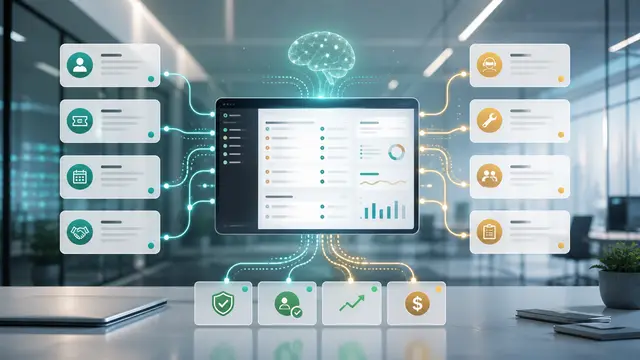
A good automation workflow starts by collecting key events from the systems already involved in the process. It standardizes the names of steps, calculates elapsed time between them, and flags records that behave differently from the expected path. AI then adds interpretation. It can summarize likely causes, compare notes or messages attached to the record, and prepare a short explanation for the manager who needs to intervene.
Why It Matters for Businesses
Bottlenecks are expensive because they hide inside normal work. A quote delayed by one day may not seem urgent, but across hundreds of opportunities it can reduce win rate. A service job waiting for parts may look unavoidable, but repeated waits for the same part family may reveal a stocking issue. An invoice sitting in review may seem like normal caution, but a pattern of avoidable exceptions can slow cash collection.
Traditional dashboards often miss these issues because they focus on final outcomes. They show revenue booked, tickets closed, invoices paid, or jobs completed. Those measures matter, but they arrive late. Time stamp analysis gives leaders earlier evidence. It shows where work is accumulating before it becomes a missed deadline.
AI adds value by making the analysis usable for busy teams. A spreadsheet can calculate elapsed days, but it does not explain why the delay might be happening. AI can compare structured timing data with notes, comments, email excerpts, status reasons, and task history. It can produce a plain-language bottleneck narrative that says, for example, that quote approvals for a specific product line are waiting on margin review because required cost data is missing at intake.
For business leaders, this creates several advantages:
- Earlier warning when a process is slowing down.
- More precise coaching because delays are tied to steps, not vague impressions.
- Better customer communication because teams can explain the reason for a delay sooner.
- Stronger ROI measurement because automation improvements can be tied to cycle time.
- Reduced fire drills because exceptions are visible before deadlines are missed.
The cultural benefit matters too. Teams argue less about who is slowing the work down when the process data is visible. The conversation shifts from blame to design. Leaders can ask whether the handoff is clear, whether required information arrives early enough, and whether approval thresholds match business risk.
The Practical Automation Opportunity
The practical automation opportunity begins with choosing one process that has both business value and traceable events. Good candidates include quote approval, customer onboarding, service scheduling, purchase requisitions, invoice exception resolution, warranty claims, hiring approvals, and website lead follow-up. The process does not need to be perfect. It only needs enough consistent time stamps to compare one record with another.
Start by defining the expected path in plain language. For a quote process, the path might be request received, discovery complete, draft created, margin reviewed, customer sent, customer revised, approved, and closed. For a service process, it might be ticket opened, triaged, technician assigned, parts confirmed, appointment scheduled, job completed, notes reviewed, and invoice created. The labels should be understandable to the people who run the process every day.
Next, capture four fields for each step: when the step started, when it ended, who or what owned it, and why it moved or stopped. The reason field may come from a status code, a note, a checkbox, or an AI-generated summary. Do not overbuild the first version. A weekly export from two systems can be enough to prove the value before deeper integration.
The AI layer should perform three jobs. First, it should normalize messy status names. One system may say pending approval, another may say manager review, and another may say waiting on leadership. AI can map those labels to a common step when rules alone are too brittle. Second, it should summarize the likely reason for delay using attached notes and comments. Third, it should recommend a next action, such as request missing customer data, escalate margin review, assign backup approver, or update the customer promise date.
Controls are important. AI should not silently change process records, promise new delivery dates, or blame individuals. It should present evidence and suggested actions to a responsible person. The workflow should show source fields, confidence level, and the exact records included in the analysis. That transparency helps teams trust the output and correct it when needed.
The first dashboard should be simple: average cycle time by process type, longest waiting step, records over threshold, most common delay reason, and total value affected. If the process touches revenue, include opportunity value or invoice amount. If it touches service, include customer tier or SLA target. If it touches operations, include downstream dependency. These filters turn bottleneck analysis into management action.
The best pilots choose thresholds with the people closest to the work. A finance leader may think three days is a reasonable review window, while the collections team knows that a one-day delay matters near month end. A service manager may accept parts delays for rare equipment, while customers expect faster communication when the delay affects an active outage. Thresholds should reflect business reality, not arbitrary dashboard colors.
Once thresholds are defined, AI can help explain exceptions in context. A record that waits four days in approval is not always a problem. It may be waiting because the customer changed scope, the order value crossed a review threshold, or a required certificate was missing. The workflow should distinguish justified waiting from preventable waiting. That distinction keeps managers from chasing noise and helps teams focus on delays they can actually reduce.
A practical bottleneck workflow should include a weekly exception review. The review does not need to be long. Leaders can look at the top delayed records, the most common delay reasons, the highest-value items at risk, and the steps with worsening trend lines. AI can prepare a one-page narrative before the meeting. The narrative should identify what changed since the prior review, which bottlenecks repeated, which owners need help, and which process rule may need adjustment.
It is also useful to separate capacity bottlenecks from clarity bottlenecks. A capacity bottleneck means the right person or team has too much work. A clarity bottleneck means work is waiting because the next step, required information, or decision authority is unclear. AI can help classify these by reading notes and status reasons. The response is different. Capacity may require staffing, scheduling, or queue balancing. Clarity may require better intake fields, policy thresholds, templates, or ownership rules.
The workflow should avoid creating a surveillance culture. The point is to improve the system, not rank employees by delay. Reports should start with process steps, queues, and categories. Individual review may be appropriate for coaching, but only after the organization understands whether the process design is creating avoidable wait time. This framing makes adoption easier because teams see the automation as a way to remove friction, not a way to assign blame.
ROI measurement should connect cycle time to business outcomes. In sales, compare quote turnaround with win rate and deal slippage. In service, compare job readiness time with repeat visits and customer satisfaction. In finance, compare invoice exception aging with cash collection and write-offs. In procurement, compare requisition cycle time with delivery delays and emergency purchases. These links help leadership understand why bottleneck detection deserves attention.
As the workflow matures, companies can add predictive alerts. If a record has the same signals as prior delayed work, the system can warn the owner before the threshold is crossed. For example, a quote missing cost data, a service ticket without parts confirmation, or an invoice with mismatched purchase order details can be flagged early. That is the real advantage of AI-supported time stamp analysis: the business moves from reporting delay to preventing it.
Business Takeaway
A company does not need a massive transformation project to find hidden process delays. It needs a practical way to read the time stamps it already creates and turn them into earlier action. AI helps by interpreting messy operational context and presenting bottlenecks in language managers can use.
The best starting point is one valuable workflow with visible steps and repeated frustration. Map the path, measure waiting time, let AI summarize likely causes, and route exceptions before customers have to ask for an update. The return is not only faster cycle time. It is a more honest operating rhythm where teams can see where work waits and fix the design of the process.