What Happened
Implementation projects often look healthy until they suddenly do not. The status report says tasks are mostly on track, the customer meeting sounds positive, and the project plan still shows a green milestone. Then a dependency slips, a stakeholder misses a decision, a configuration detail was never confirmed, or a data file arrives in the wrong format. The delay feels sudden, but the warning signs were usually present in emails, meeting notes, tickets, document changes, and calendar movement long before the milestone moved to red.
AI gives project teams a way to monitor those weak signals without turning project managers into full time auditors. An implementation milestone risk workflow can read across the operating trail of the project and identify where evidence does not support the stated status. If a milestone requires signed requirements, completed data mapping, customer approval, testing evidence, and training attendance, the workflow can check whether those artifacts exist and whether they match the current schedule.
The key shift is from task tracking to evidence tracking. A task can be marked complete because someone believes the work is done. Evidence shows whether the dependency is actually ready for the next team. AI can summarize the difference between a confident milestone, a milestone with missing proof, and a milestone that is at risk because the customer or internal team has not completed an input. This makes project review more factual and less dependent on optimism.
For many businesses, implementation delay is expensive because it touches revenue recognition, customer satisfaction, staffing plans, and support readiness. A missed go live date may require extra project hours, push out billing, compress testing, or create downstream service issues. When those risks are discovered late, leaders have fewer good options. They can add people, ask the customer to accept risk, or move the date. None of those decisions are ideal when the root cause could have been addressed earlier.
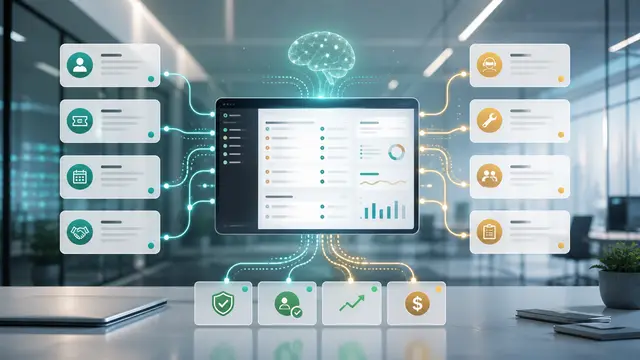
A practical AI workflow does not replace project management software. It connects the plan to the evidence around the plan. It reviews notes, tasks, file status, tickets, approvals, and customer responses, then turns that context into milestone risk signals. The project manager remains the owner, but the review becomes more consistent and less dependent on manually remembering every moving piece.
Why It Matters for Businesses
Milestone risk is usually cross functional. Sales promised a scope detail, onboarding needs customer data, technical teams need access, finance needs contract confirmation, and customer stakeholders need to make decisions. Traditional project plans show owners and due dates, but they do not always show whether each owner has enough information to finish. AI can detect when work is waiting on a hidden dependency and bring it into the weekly operating conversation.
This matters for customer experience because customers judge implementations by momentum. They may forgive a complex project, but they lose confidence when the team appears surprised by its own blockers. An AI-assisted risk review helps the business communicate earlier and more specifically. Instead of saying the project may be delayed, the team can say the data validation milestone is at risk because two source fields remain unmapped and the customer decision owner has not confirmed the rule.
The financial impact is also measurable. Businesses can track planned versus actual milestone dates, avoidable project hours, change order leakage, time from signature to launch, implementation margin, customer readiness defects after go live, and support tickets created in the first thirty days. These measures connect automation to the economics of delivery, not just project administration.
For managers, the biggest benefit may be consistency. Experienced project leads naturally look for weak signals. Newer leads may focus on the checklist and miss the silence around a key decision. AI gives every project a baseline review standard. It can flag stale tasks, contradictory meeting notes, missing approvals, and dependencies that have moved but not been reflected in the plan.
For executives, milestone risk automation creates a cleaner portfolio view. A project can be marked green only when required evidence is present. A yellow status can be tied to specific missing inputs. A red status can show the business decision needed. This reduces status theater and helps leadership allocate help where it changes the outcome.
The Practical Automation Opportunity
A good starting point is a milestone evidence map. For each major project phase, define the artifacts that prove readiness. Discovery may require confirmed scope, decision makers, system access, and data inventory. Configuration may require approved workflows, integrations, test records, and exception decisions. Launch may require training completion, support playbooks, customer signoff, and rollback criteria. The AI workflow checks each artifact and summarizes gaps.
The next layer is communication analysis. Meeting notes and customer emails often reveal risk through repeated phrases such as waiting on approval, still confirming, need to revisit, unclear owner, or pending data. AI can classify those signals by dependency and urgency. The output should be a concise risk brief that names the milestone, the evidence gap, the likely impact, and the recommended next action.
Another useful automation is decision aging. Many implementations slow down because a customer or internal leader has not made a decision, but the project plan continues as if the decision will appear on time. The workflow can track open decisions, days outstanding, owner, affected tasks, and escalation path. When a decision reaches a threshold, it can draft an escalation note that is factual rather than emotional.
Teams should begin with advisory automation before allowing automatic status changes. Let the system produce a milestone confidence score and a gap summary, then have project managers confirm or correct it. Over time, the organization will learn which signals predict real delays and which signals are harmless noise. That learning should shape thresholds, dashboards, and executive review formats.
Governance should include audit history. The business should know why a milestone was flagged, which sources were reviewed, who accepted the risk, and what follow up was created. This protects the project team from vague criticism and creates a better record for post implementation review. The purpose is to improve delivery discipline, not to create another reporting burden.
Milestone monitoring also needs a clear risk vocabulary. Teams should agree on the difference between a blocker, a dependency, a missing artifact, a customer decision, a resource conflict, and a scope change. AI can classify signals into these categories, but the categories must match how the business actually manages work. Without a shared vocabulary, every risk summary becomes another interpretation that project managers have to translate.
The workflow should also account for silence. Many project plans assume that no update means no problem, but implementation work often fails quietly. A customer stakeholder stops replying, a data owner misses two check ins, a technical question stays unanswered, or an internal reviewer has not opened the document. AI can detect inactivity around critical dependencies and flag it as a risk signal. This is useful because silence is easy to miss when teams are busy with visible tasks.
Another important feature is downstream impact mapping. If a data validation milestone is late, the workflow should show which testing tasks, training plans, billing dates, and launch communications are affected. This helps leaders decide whether to add help, change sequence, narrow scope, or reset expectations. A risk without impact becomes noise. A risk connected to downstream commitments becomes actionable.
Customer communication can be improved as well. When a milestone is at risk, the system can draft a concise update that explains the missing input, the decision needed, and the date by which action is required to protect the plan. The project manager can edit the draft for tone and relationship context. This reduces the temptation to send vague status notes and helps customers understand their role in keeping momentum.
After launch, the same evidence trail can support better retrospectives. AI can summarize which risks were detected early, which were ignored, which turned into delays, and which mitigation actions worked. This gives delivery leaders a factual basis for improving templates, kickoff checklists, customer readiness criteria, and staffing models. The automation becomes a learning loop for the whole implementation practice.
A useful milestone risk system should include thresholds for aging work. For example, a required customer decision may be low risk on day one, moderate risk after three business days, and high risk when it threatens testing or launch preparation. The threshold should change based on the milestone, project size, and customer commitment. AI can calculate the current exposure, but leadership should define what level of delay requires escalation.
Resource signals deserve attention too. A project may be delayed because the named owner is assigned to too many active milestones, because a specialist is unavailable, or because a handoff requires knowledge that only one person has. AI can compare open work, due dates, and ownership concentration to spot capacity risk. This gives managers a chance to rebalance work before the project manager has to ask for emergency help.
The best teams will keep the output simple. A weekly milestone brief should show what changed, what evidence is missing, what decision is needed, who owns it, and what happens if nothing changes. That format helps executives, project managers, and customer stakeholders stay aligned. Automation earns trust when it turns complexity into a clear operating conversation.
Business Takeaway
AI milestone monitoring helps businesses see implementation risk while there is still time to act. The workflow is most useful when it compares project status against evidence, highlights missing decisions, and turns weak signals into clear next actions.
Start with the milestones that most often slip. Define proof of readiness, connect the relevant systems, and require human review before changing commitments. The result is a delivery process that is more predictable, more transparent, and easier for customers to trust.