What Happened
Warranty claims often look like a service problem, but they are really a coordination problem. A customer reports that a product failed. A service agent asks for photos, serial numbers, purchase dates, installation notes, and usage details. A technician may need to inspect the issue. Finance may need to approve a credit, replacement, or repair. Product teams may need to know whether the failure points to a broader quality issue. None of those steps are unreasonable on their own, yet the process can still become expensive when every claim enters the same queue with the same urgency and the same manual review path.
The pattern is familiar in growing companies. A small team starts with a shared inbox, a spreadsheet, and a few experienced people who know which claims deserve attention first. That approach works while claim volume is low and the same people are available every day. It starts to break when orders increase, channel partners submit incomplete requests, seasonal demand creates spikes, or new product lines introduce failure modes that are not yet well understood. The business may still be responding, but it is no longer learning fast enough from what the claims are saying.
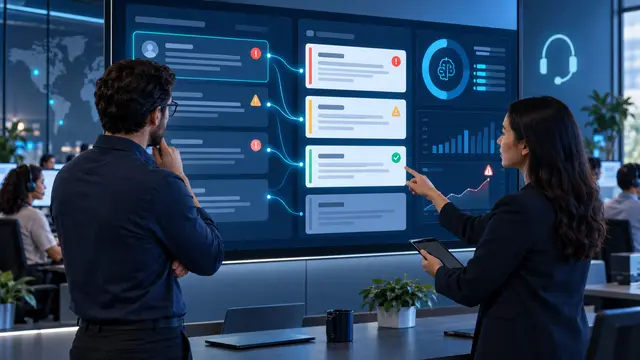
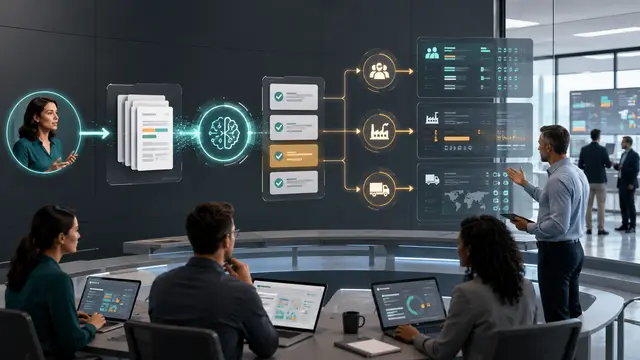
AI can help by turning warranty intake into a structured triage workflow. The goal is not to let a model decide whether a customer deserves help. The goal is to read the evidence faster, classify the claim more consistently, identify missing information earlier, and route work to the right next step before costs spread. A well-designed workflow can separate urgent safety or high-value customer issues from routine parts requests, detect duplicate claims, flag likely installation problems, and surface clusters that may need product or supplier attention.
The most useful starting point is the claim record itself. A model can summarize the customer description, extract product identifiers, compare the claim against warranty terms, and identify the likely claim type. It can look for signals such as repeated failures on the same model, claims submitted soon after installation, language suggesting misuse, or missing proof of purchase. Those signals do not replace human judgment, but they give the reviewer a cleaner starting point than a long email thread and a folder of attachments.
This is especially valuable because warranty cost is rarely limited to the replacement item. There is freight, technician time, customer service time, rush handling, credits, goodwill discounts, management escalations, and sometimes lost future revenue. When claims are not triaged, expensive cases can sit too long while simple cases consume reviewer attention. AI-supported triage helps the company apply different workflows to different levels of risk.
Why It Matters for Businesses
Warranty operations affect customer trust, margin, product quality, and team capacity at the same time. If the process is too slow, customers feel ignored. If it is too loose, the business absorbs avoidable cost. If it is too rigid, legitimate claims become frustrating. If it is not measured, leadership cannot tell whether warranty expense is caused by product issues, installation quality, documentation gaps, supplier defects, or inconsistent internal decisions.
A practical AI workflow helps the company manage those tradeoffs with more discipline. Instead of asking reviewers to read every claim from scratch, the system prepares a short operating brief: what the customer is asking for, what evidence is present, what evidence is missing, what policy area applies, whether similar claims exist, and what next action is recommended. That creates consistency without removing accountability.
The biggest business benefit is earlier separation of work. A complete low-risk claim can move quickly to approval. An incomplete claim can trigger a request for specific missing information. A high-risk claim can go to a senior reviewer or quality manager. A claim involving a strategic account can alert the account owner. A cluster of similar failures can become a product investigation. Each path has a different cost profile, and speed comes from routing, not from asking people to work harder.
AI also improves the feedback loop. Warranty claims are one of the best sources of real-world product intelligence, but many companies treat them as isolated service tickets. A model can tag recurring failure descriptions, compare language across claims, and create weekly summaries for operations, product, and supplier management. That turns individual complaints into a measurable signal. If a certain component, installation step, shipping lane, or usage condition appears repeatedly, the business can act before warranty expense becomes a margin surprise.
The workflow can support measurable controls as well. Leaders can track claim cycle time by risk type, percentage of claims missing required evidence, approval rates by product line, replacement cost by cause category, and repeat claims by customer or distributor. Those metrics reveal whether the process is improving. They also keep AI grounded in operational outcomes instead of treating it as a novelty.
For customer-facing teams, the benefit is clarity. Agents can tell customers exactly what is needed next. Reviewers can see why a claim was prioritized. Managers can audit the decision trail. Customers may not know AI assisted the process, and they do not need to know. They experience a faster, more coherent response.
The Practical Automation Opportunity
The best implementation starts with intake standardization. Create one warranty claim form or intake path that captures the basics: customer name, account or order number, product model, serial number, purchase date, installation date, failure description, requested resolution, photos or documents, and urgency. If claims arrive by email, use automation to convert them into the same structured case format. The point is to prevent the workflow from depending on where the claim started.
Next, define a triage framework that humans agree with before adding AI. Useful categories might include complete and routine, missing information, potential policy exception, possible product quality issue, customer escalation, safety concern, duplicate or repeat claim, and high-cost replacement. Each category should have an owner and next action. AI should classify against this framework, not invent categories every time.
A practical workflow can include:
- Intake capture from forms, email, portal submissions, and partner requests.
- AI summarization of claim details and customer impact.
- Evidence checklist review for proof of purchase, photos, serial numbers, and dates.
- Risk scoring based on cost, customer tier, product history, urgency, and repeat patterns.
- Suggested next action with a human reviewer for approvals and exceptions.
- Automatic follow-up requests for missing information.
- Escalation alerts for safety, strategic accounts, or repeated failures.
- Weekly quality summaries for product, supplier, and operations teams.
Companies should be careful with final decision automation. Denying a warranty claim can affect customer trust and may require nuance. A better early design is decision support: the system prepares the evidence, flags policy considerations, and recommends a path, while a named employee approves the outcome. Over time, low-risk approvals can become more automated if the company has enough data and audit confidence.
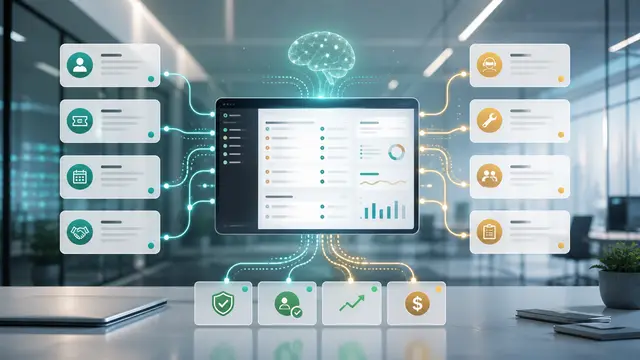
Integration matters more than model sophistication. The workflow should connect CRM, ecommerce, ERP, service desk, document storage, and product records where possible. If the model cannot see purchase history or prior claims, its recommendation will be shallow. If the result does not flow back into the service system, employees will copy and paste, and adoption will fade. The automation should reduce work at the point where people already operate.
Governance should be built in from the start. Keep a record of the source documents used, the model summary, the recommended category, the human decision, and the final customer response. Review a sample of cases each month. Look for bias against certain channels, inconsistent policy interpretation, or overconfident recommendations when evidence is thin. AI triage works best when it makes uncertainty visible.
A phased rollout is usually enough. Start with one product family or one claim type. Measure the current baseline for cycle time, missing information, escalation rate, and cost per claim. Then introduce AI summaries, evidence checks, and routing suggestions. Compare results after a few weeks. Expand only when reviewers trust the output and managers can see measurable improvement.
Business Takeaway
Warranty claims are not just service tickets. They are cost signals, customer trust moments, and product learning opportunities. AI helps when it brings structure to the first review: what happened, what evidence exists, what risk is present, and who should act next. The payoff is not a fully automated denial or approval engine. The payoff is faster routing, fewer incomplete reviews, better escalation, and a clearer view of where warranty cost is really coming from. Businesses that build this workflow early can protect margin while giving customers a more dependable experience.
A useful next layer is cost visibility. Many warranty teams know the price of a replacement part, but they do not always attach the full handling cost to the case. The workflow should estimate the total cost exposure using part cost, shipping method, technician time, restocking effort, credit amount, and expected follow-up work. That estimate does not need to be perfect to be useful. It simply helps the team see which claims deserve a deeper review and which claims can move through a standard path.
The same workflow can improve customer communication. When evidence is missing, the system can draft a specific request instead of a vague response. For example, it can ask for a photo of the serial plate, proof of purchase, installation date, or a short video showing the failure condition. Clear requests shorten the cycle because customers know exactly what to provide. They also reduce the risk that agents ask for unnecessary information.
Another high-value feature is cluster detection. A single claim may be routine. Ten similar claims on the same product, region, installer, shipping lane, or supplier batch may deserve investigation. AI can compare summaries across cases and create a weekly list of emerging patterns. Product and operations leaders can then decide whether to update instructions, inspect inventory, contact a supplier, or prepare customer guidance. This turns warranty work from a cost center into an early warning system.