What Happened
Warranty claims are often treated as a back office cost center, but the work actually sits at the intersection of customer experience, service delivery, product quality, inventory, and finance. A claim can begin as a short note from a customer, a technician comment, a website form, a phone call summary, or a part replacement request. By the time it reaches the person who can approve, deny, or investigate it, the business may already have paid for labor, reserved replacement parts, issued a credit, or promised a resolution without a complete view of the facts.
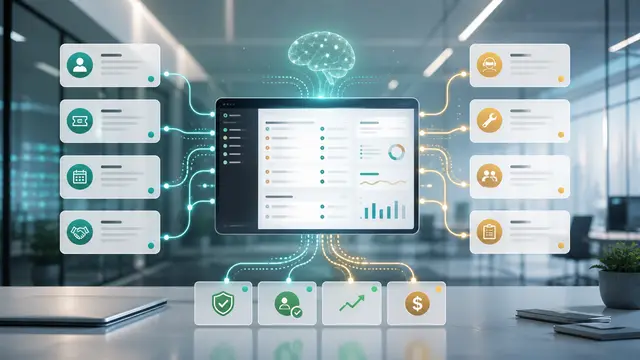
AI changes the warranty process by making the first review more consistent. Instead of waiting for a manager to read every claim from scratch, an AI workflow can assemble the service history, purchase record, product age, previous repairs, technician findings, customer status, and applicable warranty terms into a structured review packet. The goal is not to let software make the final commercial decision. The goal is to make sure every reviewer sees the same context, the same missing evidence, and the same likely next action before cost spreads across the operation.
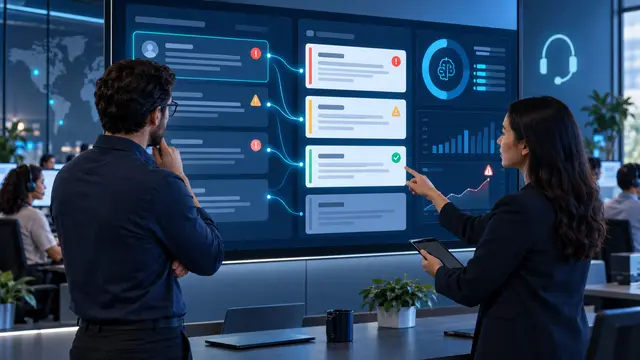
A practical warranty triage workflow starts with intake. Every new claim is converted into a standard case profile with the customer, product, serial or order reference, failure description, photos if available, date of purchase, and claimed remedy. The AI can classify the issue into categories such as likely covered failure, likely wear item, unclear documentation, repeat service event, possible misuse, or possible product defect trend. Those classifications help route work quickly without forcing the first human reviewer to search across five systems.
The strongest use case is early cost containment. If a claim lacks proof of purchase, conflicts with service records, or appears tied to a known installation issue, the system can pause automatic credits and request the missing evidence. If the claim looks routine and low risk, it can move to a faster approval lane. If the claim resembles a pattern seen across several accounts, it can alert service leadership and product management before the same issue becomes a larger quality or supplier problem.
This is where automation becomes more valuable than a simple dashboard. A dashboard shows how many claims are open. A triage workflow decides what each claim needs next. It can create a task for the technician, draft a customer update, flag a finance review, reserve but not release inventory, or escalate a group of similar claims for root cause analysis. The business gets speed without losing judgment, because the humans are reviewing better prepared cases instead of incomplete fragments.
Why It Matters for Businesses
Warranty leakage rarely arrives as one large failure. It usually builds through dozens of small decisions: an unnecessary truck roll, a replacement sent without diagnosis, a duplicate credit, an approval that should have been a goodwill exception rather than a warranty charge, or a denial that damages a valuable relationship. AI helps leaders see those decisions earlier and compare them against policy, customer value, and operational capacity.
For customer service teams, faster triage means fewer vague updates. A representative can see whether a claim is waiting on photos, technician notes, eligibility review, or parts confirmation. That clarity improves the customer conversation because the answer is tied to a specific next step. It also reduces internal handoff noise, since every department is working from the same case profile instead of forwarding screenshots and partial notes.
For finance leaders, the benefit is cleaner cost attribution. Warranty expense can be separated from goodwill concessions, installation errors, preventable service callbacks, supplier defects, and training issues. That separation matters because each category has a different owner and a different fix. Without the distinction, the business may reduce service quality to control cost, when the real problem is a documentation gap, a supplier batch, or a quoting issue.
For operations leaders, the value is pattern detection. AI can compare claim language, part numbers, regions, installers, production lots, and service outcomes to identify clusters that humans may miss until month end. The earlier the pattern is visible, the faster the business can update instructions, inspect inventory, contact affected customers, or adjust supplier conversations. This turns warranty from a reactive expense into a feedback system.
The measurable ROI should be tracked in operating terms. Useful metrics include average claim cycle time, percentage of claims with complete evidence on first review, duplicate replacement rate, goodwill exceptions separated from covered warranty, claim reopen rate, preventable truck rolls, and cost recovered from suppliers. These metrics make the automation accountable to business outcomes rather than novelty.
The Practical Automation Opportunity
The best first automation is a claim readiness review. When a claim is created, the workflow checks required fields, compares dates against warranty rules, pulls related service records, detects missing attachments, and assigns a confidence level. Claims with high confidence and low dollar exposure can move into a fast lane. Claims with missing evidence receive an automated request for the exact information needed. Claims with high exposure or unusual patterns move to a specialist queue.
A second opportunity is technician note analysis. Field notes often contain the truth of the claim, but they are inconsistent. AI can extract symptoms, observed cause, parts used, environmental conditions, customer comments, and whether the work appears connected to prior service. The system can then compare that evidence with the requested remedy. If the technician note says the product was damaged by an external condition, the claim should not be treated the same as a covered failure.
A third opportunity is customer communication support. The workflow can draft plain language updates that explain what is needed next, what has been approved, or why a review is required. The draft should remain editable by the service team, and sensitive decisions should require human approval. This keeps the tone professional while reducing the time representatives spend reconstructing the case.
Implementation should be narrow at the start. Choose one product line, one service region, or one claim type with enough volume to matter. Define the evidence checklist, approval thresholds, exception categories, and escalation owners. Then run the AI triage in parallel with the existing process for a few weeks. Compare outcomes before automating any action that affects credits, inventory release, or customer commitments.
Governance is essential. The workflow should record which data was used, which recommendation was made, who approved the action, and which policy rule applied. Reviewers should be able to override the recommendation and capture why. Those overrides are not a failure. They are a training signal that helps the business refine policies, improve prompts, and identify edge cases that should remain human led.
The operating design should also define financial guardrails. Claims below a certain amount may only need evidence completeness and policy fit. Claims above that amount may require finance review, service leadership review, or supplier notification. AI can apply those thresholds consistently and explain why a claim landed in a specific lane. That explanation is important because warranty teams often face pressure from customers, sales, and service teams at the same time. A clear policy based route reduces personal negotiation and keeps exceptions visible.
Another practical detail is parts control. When a replacement part is requested, the workflow can check stock availability, part cost, customer urgency, and whether the defective item must be returned. It can reserve inventory while the claim is reviewed instead of releasing it immediately. If the same part is appearing in multiple claims, the system can notify purchasing or quality teams. This prevents the warranty desk from solving individual cases while missing a broader supply or installation problem.
Businesses should also use the workflow to improve documentation habits. If technicians frequently submit notes that are too vague for warranty review, the AI can identify which fields are missing and prompt for better detail before the case closes. If customers often submit photos that do not show the failure clearly, the workflow can send a specific request with examples of what is needed. Better documentation reduces rework and makes approvals easier to defend.
A mature workflow will separate customer communication from internal decision language. The internal review may mention policy exceptions, suspected misuse, supplier recovery, or cost exposure. The customer message should be clear, respectful, and focused on next steps. AI can help draft both versions, but the business should review templates carefully so sensitive reasoning is not accidentally exposed. This keeps the process professional while still giving the customer useful information.
Finally, leaders should schedule a monthly warranty learning review. The automation can summarize top claim categories, recurring evidence gaps, expensive exceptions, repeat accounts, suspect part clusters, and policy rules that caused confusion. That review turns case level automation into operational improvement. The best warranty systems do not only close claims faster. They reduce the number of avoidable claims that appear in the first place.
Business Takeaway
Warranty automation is not about denying more claims. It is about making every claim easier to understand before money, inventory, and customer trust are committed. Businesses that use AI for triage can resolve routine issues faster, spot costly patterns earlier, and protect relationships with clearer communication.
Start with readiness scoring, evidence collection, and routing. Keep final judgment with accountable people. Measure cycle time, leakage, reopen rates, and preventable service cost. When those measures improve, warranty stops being a scattered expense process and becomes a practical operating feedback loop.