What Happened
Warranty cost is one of those business signals that can look manageable until it suddenly
becomes a finance problem. Service teams see repeat failures, operations sees parts usage,
customer support hears complaints, and finance sees the reserve only after costs have
already gathered momentum. When those signals stay separated, leadership may not realize
that a product line, vendor batch, installation method, or customer segment is creating
future expense. AI automation can help by turning scattered warranty activity into early
reserve signals before month-end review exposes a surprise.
This is not about letting AI set accounting policy. Finance still owns reserve methodology,
materiality, and judgment. The automation opportunity is earlier visibility. AI can review
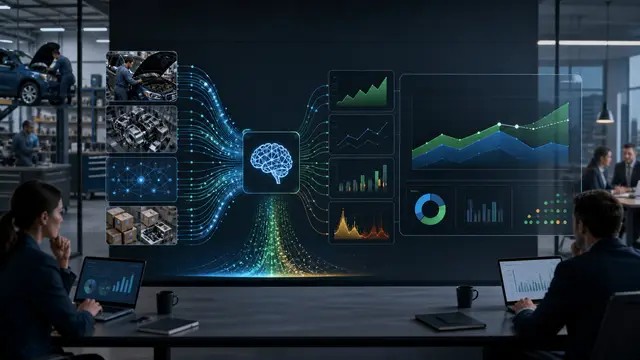
claims, service notes, replacement part usage, customer complaints, return reasons, and
quality tags to identify patterns that deserve finance review. Instead of waiting for a
quarterly analysis, the business can maintain a living watchlist of warranty risk drivers.
The watchlist helps finance ask better questions while operations still has time to
investigate causes.
Warranty workflows often suffer from inconsistent descriptions. One technician writes that a
unit failed under load. Another says intermittent shutoff. A support agent records customer
says machine quits. A returns clerk chooses a generic defect code. Separately, each record
looks too small to escalate. Together, they may describe the same failure mode. AI is useful
because it can cluster similar descriptions and surface emerging patterns without forcing
every employee to use the exact same phrase.
For companies that sell, install, service, or support physical products, warranty reserve
visibility is a bridge between customer experience and financial discipline. When the bridge
is weak, finance gets late numbers, operations debates the cause, and customer teams keep
promising replacements without understanding the broader trend. A practical AI workflow
gives the organization a shared view of what is changing and which risks should move from
anecdote to action.
Why It Matters for Businesses
Warranty surprises affect more than accounting. They can reduce margin, strain service
capacity, weaken supplier negotiations, and damage customer trust. If a business discovers
the issue late, it may have already shipped more units, repeated the same installation
mistake, or missed the chance to recover costs from a supplier. Early detection gives
leadership more options. They can adjust quality checks, change stocking plans, revise
customer communication, negotiate with vendors, or update reserve assumptions with evidence.
The workflow also helps finance become a proactive partner instead of the department that
raises concerns after the damage is visible. When AI produces a monthly or weekly warranty
signal brief, finance can review patterns with service and operations in plain language. The
conversation shifts from why did expense jump to what signals are building and what evidence
do we have. That makes reserve discussions less adversarial and more operational.
Measurement should focus on decision quality. Useful metrics include days from first repeat
signal to finance review, percentage of claims with complete cause data, reserve adjustment
cycle time, supplier recovery dollars, repeat failure rate, and service hours tied to
warranty work. These metrics show whether the automation is improving visibility and action,
not just creating another report. The system should also track false alarms so thresholds
improve over time.
There is a compliance angle too. Warranty reserves require consistency and documentation. AI
can help assemble support evidence, but it should not hide assumptions. Every signal brief
should preserve source references, claim counts, date ranges, affected products, and
confidence levels. Finance teams need explainable summaries that support review, not black-
box predictions that no one can defend. The strongest workflow is transparent about what it
knows and what still needs investigation.
The Practical Automation Opportunity
- Pull structured and unstructured warranty data from claims, service notes, parts
replacements, returns, CRM complaints, supplier records, and quality inspections. - Use AI
to group similar failure descriptions, detect unusual frequency, and identify clusters by
product, lot, region, installer, vendor, or customer segment. - Generate a finance-ready
signal brief that includes pattern summary, claim trend, estimated exposure range, source
evidence, and recommended review owner. - Route operational investigations to quality,
service, or supplier management while finance reviews reserve implications. - Maintain a
decision log so reserve discussions, supplier recovery actions, and process fixes are
traceable.
A good first version can be narrow. Pick one product family or warranty category with
meaningful cost. Build a weekly review that compares new claims to a trailing baseline,
clusters free-text descriptions, and highlights unusual combinations. For example, an
increase in replacement motors tied to one installation region may point to training. A
cluster of cracked housings tied to a supplier lot may point to procurement recovery. AI
does not need to decide the answer. It needs to put the right pattern in front of the right
team quickly.
The automation should distinguish between signal and conclusion. A signal says there is a
pattern worth reviewing. A conclusion says the business should change reserve assumptions,
file supplier claims, issue customer guidance, or alter process. Humans should own
conclusions. AI can support them by reducing the time spent gathering evidence and by making
weak signals visible earlier.
Businesses should also design the workflow for feedback. When reviewers mark a signal as
valid, duplicate, known issue, supplier caused, training caused, or not material, that
feedback should improve future triage. Over time, the system becomes more aligned with the
companys products, service language, and finance thresholds. That local learning is more
valuable than a generic dashboard because it reflects how the business actually experiences
warranty risk.
The reserve signal workflow should begin with a shared taxonomy. Finance, service, quality,
and operations need common categories for claim type, failure mode, suspected cause,
customer impact, supplier involvement, and remediation status. AI can help map messy notes
into those categories, but the business should still define the categories. Without that
shared language, every report becomes a translation exercise and every reserve conversation
starts with basic clarification instead of decision-making.
Another practical design choice is to separate frequency signals from severity signals. A
high-frequency low-cost issue may create service workload and customer irritation even if
the immediate reserve impact is modest. A low-frequency high-cost failure may require
finance review even before volume rises. AI can highlight both patterns and explain why each
matters. That helps the business avoid a narrow focus on claim count alone. Exposure is a
combination of volume, cost, customer promises, supplier recovery, and probability of
recurrence.
The automation can also improve supplier conversations. When claims are linked to lots,
parts, regions, or production windows, procurement and quality teams can approach vendors
with evidence instead of anecdotes. The brief can include claim examples, photos if
available, service notes, replacement costs, and timing. This does not guarantee recovery,
but it improves the companys negotiating position and gives suppliers a clearer path to
investigate. Finance benefits because potential offsets or recovery plans become visible
earlier.
Finance leaders should decide how the workflow fits into closing routines. The weekly signal
brief may be operational, while a month-end reserve review may require stricter
documentation and signoff. AI can prepare the packet, but the approval path should remain
explicit. The packet might include trend charts, supporting claim samples, management
commentary, open investigations, and recommended accounting review questions. This structure
keeps the automation aligned with financial control rather than creating a parallel informal
forecast.
Implementation should include a review calendar that matches the rhythm of the business.
Service managers may need a weekly operational view, while finance may need a month-end
reserve packet and a quarterly trend review. Quality teams may need immediate alerts when a
failure pattern crosses a threshold. The same underlying signals can feed each cadence, but
the level of detail should differ. Executives need decisions and exposure ranges.
Investigators need claim examples, photos, notes, and affected units.
It is also useful to assign every signal a next question. A supplier pattern may ask whether
recovery is possible. A product pattern may ask whether inspection or design review is
needed. A regional pattern may ask whether installation training is inconsistent. A customer
segment pattern may ask whether usage conditions differ from assumptions. By framing signals
as questions, the workflow keeps teams focused on action instead of arguing about whether AI
has proven a cause.
A final practical step is to connect the workflow to budget ownership. Warranty exposure may
sit in finance reports, but the causes often sit in product, supplier management, service
training, installation quality, or customer education. Each validated signal should name the
owner who can reduce future cost, not only the analyst who found the pattern. That owner
should receive a clear action request, a due date, and the evidence needed to start. When
reserve signals are tied to operational ownership, the business does more than forecast the
problem. It starts reducing it.
Business Takeaway
AI gives warranty reserve management a better early-warning system. It connects the
practical evidence sitting in service and support systems with the financial judgment
required to protect margin. The takeaway is simple: do not wait for warranty cost to become
a surprise line item. Build a signal workflow that helps finance, service, operations, and
supplier teams see the pattern while the business still has choices.